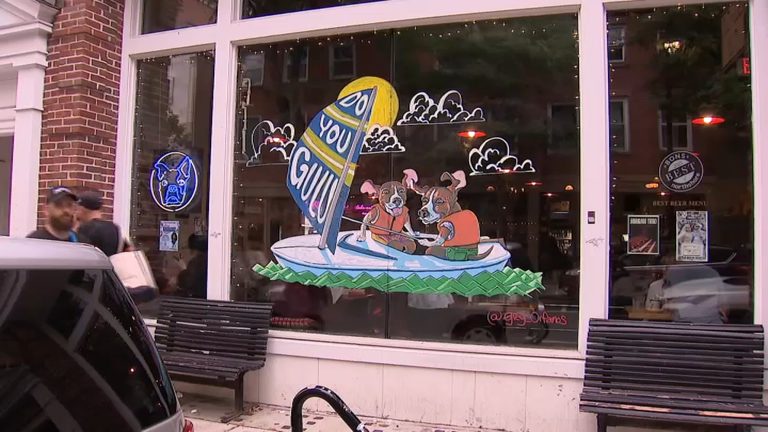
Salem, Mass. – A recent amendment to the city’s window‑art ordinance sparked an unexpected backlash from downtown merchants. The Salem Redevelopment Authority (SRA) had spent three years revising a rule that dated back to 1973, increasing the permitted coverage from 15% of a storefront’s glass to 20% and extending the allowable display period from 15 days to three months.
Business owners feel the change is enforcement, not relief
Eric Cressimano, owner of the Gulu‑Gulu Café, said he has displayed window art for nearly 13 years without issue. “A city employee from the Salem Redevelopment Authority popped in a week after we got our new window art up and said, ‘This has to come down. It’s against the rules, it has to come down,’” Cressimano recalled.
While the SRA’s intent was to make the ordinance less restrictive, many longtime businesses interpreted the updated guidance as the start of active enforcement. “The intention started good. They had this idea of they wanted to make it less restrictive, but we’re coming from no enforcement to enforcement at that point,” Cressimano explained.
Mayor steps in, puts guidance on hold
Following a flood of comments from merchants and residents, Salem Mayor Dominick Pangallo asked the SRA to suspend the new guidance while the city reviews its impact. The mayor emphasized that the city has never intended to fine businesses or ban artistic expression. “We are supportive of the contribution of the arts to the character of our downtown,” said SRA Chair Grace Napolitano during a Wednesday meeting.
Mayor Pangallo’s decision reflects a broader commitment to balance regulatory clarity with the vibrant, family‑friendly atmosphere that defines Salem’s downtown core. He noted that the city will reopen the rule for public comment later this fall, giving stakeholders a chance to shape a policy that protects both safety and creativity.
Community response highlights the value of local art
Local business owners expressed pride in the community’s rapid mobilization. “I’m just really, really proud and excited for how much the community came together over this,” Cressimano said.
Arts advocates in Salem argue that decorative window displays enhance the visual appeal of commercial corridors, encouraging foot traffic and supporting family‑oriented shopping experiences. They point to similar initiatives in other New England towns where modest art installations have boosted downtown vitality without compromising safety or historic preservation standards.
What’s next for the window‑art rule?
The SRA plans to present the revised guidance to the public later this fall, inviting comments from merchants, residents, and preservation groups. The city will consider feedback before deciding whether to adopt the expanded limits, revert to the original 1973 parameters, or craft a new compromise.
In the meantime, the SRA has indicated that no fines will be issued for existing displays, and businesses are encouraged to continue showcasing their art while the rule remains on hold. Salem’s downtown merchants hope the outcome will preserve the town’s historic charm while allowing creative expression to flourish.
For updates on the upcoming public hearing and any further changes to the ordinance, residents can visit the city’s official website or contact the Salem Redevelopment Authority directly.
Original reporting: NBC10 Boston — read the source article.