When Brevard County announced a septic‑to‑sewer conversion that will affect more than 780 homes, the county’s Communications Director, Don Walker, emphasized the project’s environmental benefits. The plan includes a vacuum pump station at 1485 S. Oaks Drive, a residential site chosen for its impact on reducing pollution in the Indian River Lagoon and the Banana River.
Why the pump station matters
For years, septic tanks have discharged untreated waste directly into the lagoon, contributing to algae blooms and seagrass loss. Converting these systems to a centralized sewer network is a critical step toward restoring clean water, according to Walker. “Septic‑to‑sewer conversion projects are critically important to reducing pollution and restoring clean water to the Indian River Lagoon,” he wrote.
Neighborhood opposition
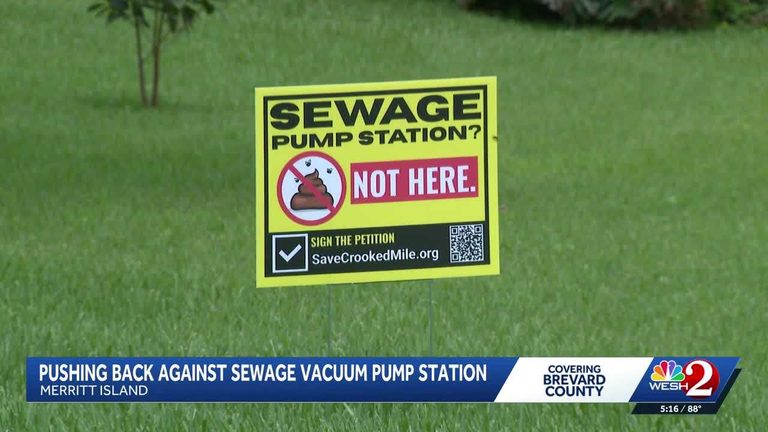
Local residents, however, are uneasy about having a sewage pump station so close to homes, playgrounds, community centers and places of worship. Marilyn McAndrew voiced the community’s concerns: “None of us are happy about it, for several different reasons. We have children in the neighborhood. We think that the odor — and they tell us there is none — but we’ve visited other places where they have this system, and they have an odor.” Craig Wallace, chairman of the Brevard Indian River Lagoon Coalition, echoed the sentiment, noting, “Nobody wants to have sewage being pumped through a system and it sitting across the street from them, or even a couple houses away.”
County response to concerns
Walker responded that the pump house will be enclosed in a shell designed to blend with the surrounding homes. The design includes sound‑attenuating equipment and measures to control odor and noise. “The purpose of the project is to provide sanitary sewer service while minimizing the facility’s impacts on the surrounding neighborhood,” he said.
He also explained that a gravity‑only sewer line is not feasible in the narrow rights‑of‑way of the existing neighborhood, making a pump station the practical solution. Once the sewer service is in place, the county will offer grants to help residents offset connection costs.
Financial and procedural details
The land for the pump station was listed for $299,000 in February 2026. An appraisal on March 24, 2026, valued the property at $130,000. After the owner rejected the county’s offer at the appraised value, the county proceeded with the higher price. The land purchase was approved by the Board of County Commissioners in May 2026, along with approval to hire an engineer.
Walker noted that permitting, bidding and construction are still pending, so no firm completion date has been set. He added that the county’s long‑term plan includes grants for homeowners to offset the cost of connecting to the new sewer system.
Looking ahead
Residents hope the county will consider an alternative location outside a densely populated block. “Our hope is that they will find a suitable location outside of a densely populated neighborhood,” McAndrew said.
State regulations will require certain commercial and residential properties of 10 acres or less in designated Indian River Lagoon protection areas to connect to central sewer or install nitrogen‑reducing treatment systems by July 1, 2030, according to the Florida Department of Environmental Protection. The county’s project is part of meeting that statewide mandate.
While the community’s concerns about odor, noise, road wear and property values remain, county officials maintain that the environmental benefits and long‑term public‑health improvements justify the project. The debate underscores the balance local governments must strike between infrastructure needs and preserving quality of life for families.
Original reporting: WESH Orlando — read the source article.