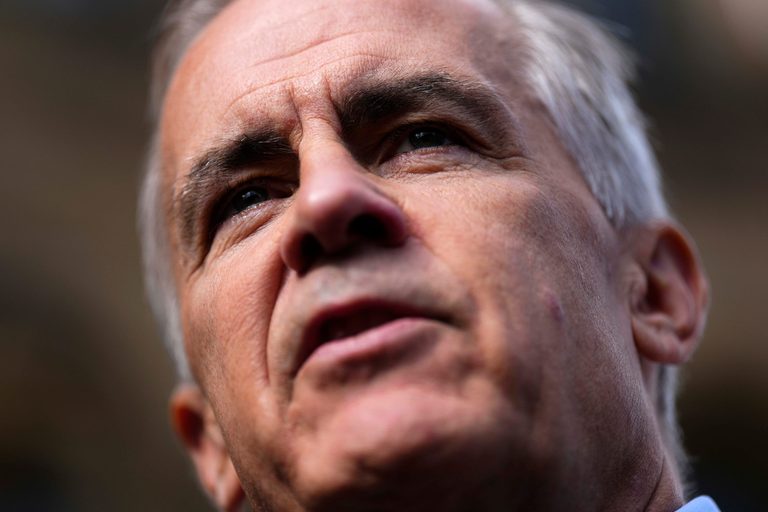
Toronto – In a prerecorded address, Prime Minister Mark Carney said Canada will move faster to reduce its economic reliance on the United States and deepen ties with Europe as the latest round of U.S. tariff policy takes effect on roughly $20 billion worth of American goods.
Retaliation and rationale
Carney warned that “in too many areas, they wanted dependency, not a true economic partnership.” He argued that four decades of deeper integration have left Canada overly dependent on a single partner. The new tariffs, he said, are a necessary response to President Donald Trump’s recent measures that violate the North American trade agreement.
Canada’s retaliation matches the U.S. actions dollar for dollar, targeting steel, aluminum, cheese, appliances, clothing, cosmetics and farm equipment at rates of 15%, 25% or 50%. The affected products represent about 6% of the $333.6 billion the United States exported to Canada last year.
Looking to Europe
While the trade dispute unfolds, Canada is exploring a deeper relationship with the European Union that could stop short of full membership. Options under discussion include expanding existing agreements, negotiating a new treaty or creating other forms of cooperation. An unnamed official said provinces, territories and labor groups are being consulted, though no final model has been chosen.
Carney will travel to Strasbourg next week to attend European Commission President Ursula von der Leyen’s State of the European Union address and to speak before the European Parliament, signaling the importance of the trans‑Atlantic pivot.
Domestic impact and response
Carney acknowledged the tariffs will cause short‑term pain for Canadian consumers and businesses, but he framed the cost as an investment in a more resilient economy. “Standing still would cost more,” he said, emphasizing the need for faster investment in infrastructure and trade diversification.
The prime minister also defended Canada’s decision to walk away from recent trade talks, accusing Washington of seeking limits on French‑language and cultural protections, as well as terms that would weaken Canada’s auto, steel and forestry sectors.
U.S. reaction and broader stakes
U.S. Trade Representative Jamieson Greer has hinted that Washington could retaliate further by blocking additional Canadian products. The official described the potential response as a “nuclear response,” though Canada says it will not change course regardless of Washington’s next move.
Analysts note that how this trade dispute resolves could test whether a smaller U.S. ally can withstand President Trump’s economic pressure without yielding. The conflict also underscores the broader strategic shift as Canada seeks trusted partners beyond its southern neighbor.
Public sentiment
Canadian public opinion appears to be rallying behind Carney’s stance. Former U.S. trade official Wendy Cutler observed that both sides seem reluctant to make the first move, while a spokesperson for Canada‑U.S. Trade Minister Dominic LeBlanc said officials continue informal discussions despite the pause in formal negotiations.
Carney praised Canadians for choosing domestic products and travel, saying, “Every time we choose to buy Canadian and travel in Canada, we are sending a message that nobody is in the stands, 40 million of us are on the ice.”
Original reporting: Alexandria, VA News – WTOP News — read the source article.