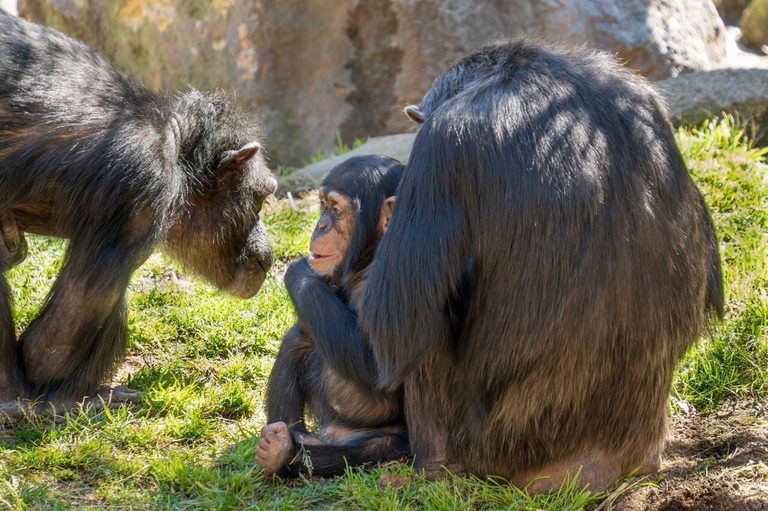
In a groundbreaking study published in PLOS ONE, a British research team has shown that chimpanzees develop distinct vocal accents as they grow, challenging the long‑standing belief that their calls are fixed at birth.
Research design and key findings
The scientists compared the vocalizations of infant and juvenile chimpanzees from two geographically separate groups. By analyzing grunts, whimpers and laughter, they found that differences between the populations became more pronounced with age. Some population‑specific vocal traits were already detectable in infancy, while others emerged during the juvenile years.
Lead author Kassandra Giragosian, a doctoral researcher at Queen Mary University of London, explained that the developmental pattern points to the influence of social interaction, environmental conditions and other non‑genetic factors on chimp communication. “Understanding how communication develops during early life is fundamental to understanding animal behavior,” she said.
Implications for primate communication research
The findings add to a growing body of evidence that primate vocal behavior is more flexible and dynamic than previously thought. While the study does not claim that chimpanzees possess language in the human sense—requiring shared grammar and lexicon—it demonstrates that their vocal development is shaped by more than genetics alone.
Giragosian noted that the research provides a valuable framework for investigating how communication systems emerge and diversify within animal populations. By showing that population‑specific vocal patterns become increasingly distinct during development, the work offers fresh insight into the biological and environmental factors that shape communication in primates and informs broader discussions about the evolution of complex communication systems.
Broader scientific context
Previous assumptions held that chimp calls were largely inflexible, determined solely by genetic inheritance. This new evidence suggests that early social experiences and ecological contexts play a significant role, aligning chimp vocal development more closely with the way human infants acquire language through interaction.
The study’s authors hope that their methodology—focusing on developmental changes rather than static adult comparisons—will inspire further research into vocal learning and cultural transmission across a range of species.
Future directions
Future investigations may explore how specific social structures, habitat differences, or human‑induced environmental changes influence vocal development in wild chimp populations. Such work could deepen our understanding of the mechanisms behind vocal flexibility and its evolutionary significance.
Overall, the research underscores the importance of considering both genetic and experiential factors when studying animal communication, offering a more nuanced view of how complex vocal behaviors arise in our closest living relatives.
Original reporting: KTBS 3 (Shreveport) — read the source article.