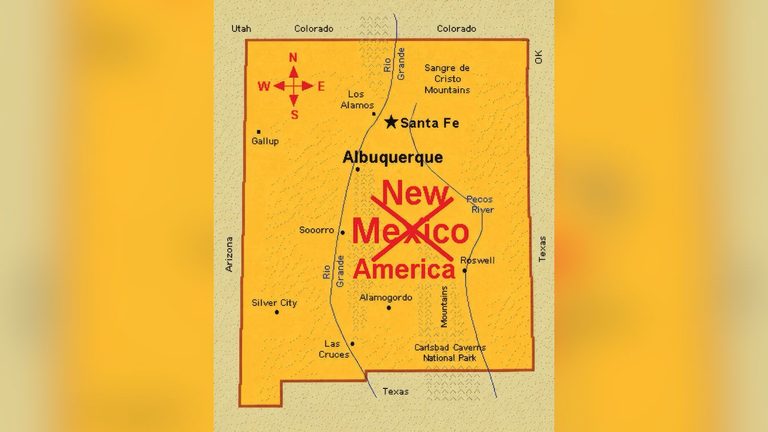
President Donald Trump used his Truth Social platform on Sunday to post a graphic that replaces the word “Mexico” on the outline of the state with “America.” The image, which the White House later reshared on X, was posted without any accompanying explanation.
National leadership, local reaction
While the President has the authority to rename geographic features in the federal Geographic Names Information System, the Constitution does not grant him the power to rename states. That authority rests with the individual state governments. Nonetheless, the Trump administration has been active in asserting its vision for America’s landmarks, most recently with an executive order that changed Lake Ontario’s name to “Lake America” and a prior order that renamed the Gulf of Mexico the “Gulf of America” in January 2025.
New Mexico Governor Michelle Lujan Grisham, a Democrat, quickly responded, accusing the President of attempting to divert attention from what she called his “disastrous war in Iran” and rising gas prices. “While the White House wastes time coloring on maps, Nuevo México is busy doing the work,” she wrote on X.
Democratic Senator Martin Heinrich also pushed back, stating on X, “Three things I will always call by their actual names: The Gulf of Mexico, Lake Ontario, New Mexico.” Both officials emphasized that the state’s name dates back to the 16th century, according to a Bureau of Indian Affairs fact sheet.
Administration’s rationale
President Trump has framed these naming initiatives as a demonstration of American sovereignty and a reaffirmation of national identity. In a recent interview, he suggested that the United States should consider renaming one of the oceans, saying, “We have a gulf and we have a lake. Now, all we need is an ocean. Maybe we’ll change the Atlantic and/or the Pacific.” The administration views such symbolic actions as a way to reinforce patriotic sentiment and to remind citizens of America’s historic greatness.
Supporters of the President argue that these gestures, while largely symbolic, reflect a broader effort to assert American values at a time of intense global competition, especially amid the ongoing trade dispute with Canada. They contend that renaming landmarks can inspire pride and unity among citizens.
Political context
The map post comes amid a heated political environment, with the President’s opponents accusing him of using symbolic acts to distract from policy challenges, such as the war in Iran and rising energy costs. Critics also point out that the President’s executive orders on naming have faced legal scrutiny, as the authority to rename states is not granted to the federal government.
Nevertheless, the Trump administration has placed the map on the official White House X account, signaling that it stands behind the President’s vision. The administration’s communications team has not offered further details, but the rapid repost suggests endorsement of the President’s symbolic messaging.
What’s next for New Mexico?
State officials have reiterated that any official name change would require action by the New Mexico legislature and the consent of its citizens. Governor Lujan Grisham has indicated that the state will continue to focus on practical issues such as infrastructure, education, and economic development, rather than entertaining symbolic renaming proposals.
As the debate unfolds, the President’s supporters remain confident that the naming initiatives will bolster national pride, while opponents maintain that the focus should remain on substantive policy matters that affect everyday Americans.
Original reporting: Alexandria, VA News – WTOP News — read the source article.