Brooklyn’s Eastern Parkway will once again echo with steel drums, vibrant flags and the scent of jerk chicken as the West Indian Day Parade rolls through on Monday. While the event is a long‑standing celebration of Caribbean culture, this year it carries a heavier meaning for the city’s Haitian community.
Local pride meets federal policy
Organizers of Lespri Ayiti – the largest Haitian marching group in the parade – say the festivities are both a defiant assertion of pride and a rare bright spot after a year of hardship. “There’s a somber cloud over it with everything that has happened from last year to this year with TPS … what’s happening in detention centers, and those who are being sent back with no valid way of living or supporting themselves,” said Natalie Lafontant, a Brooklyn native who helps lead the group.
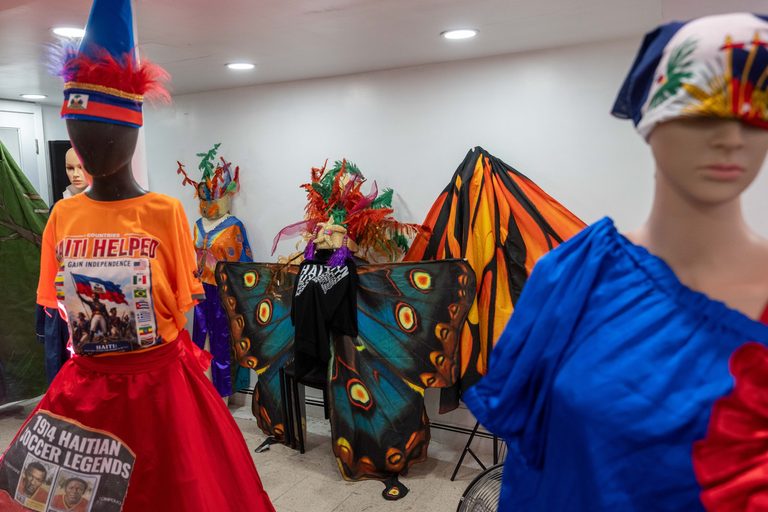
Despite the gloom, Lafontant emphasized the Haitian tradition of resilience. “If you know anything about the Caribbean, especially about Haiti, we use music, dance, art, to continue to strive and push through,” she said while reviewing the elaborate costumes being prepared at a community center.
Trump administration ends TPS for Haitians
In June, the Supreme Court ruled 6‑3 in Mullin v. Doe that federal courts cannot review the Trump administration’s decision to terminate Temporary Protected Status (TPS) for Haitian and Syrian immigrants. The ruling cleared the way for roughly 350,000 Haitians in the United States to lose the protection that allowed them to remain legally. A federal judge finalized the order in early August, and work permits tied to Haitian TPS expired on July 27.
TPS had been a lifeline for many Haitian families, granting them legal work authorization and protection from removal. Its loss threatens to separate families, force many back to a country still grappling with gang violence and economic collapse, and place additional strain on local social services.
Community response and financial strain
Lespri Ayiti’s 180‑member collective is marching in the parade for the second consecutive year, but this season they faced a steep increase in costs. “All the insurances that we’ve got to cover, the people who walk, you’ve got to take care of them, the costumes, the designers. You add that all up, it’s a very hefty bill. But we continue to do it because we love our country,” Lafontant explained.
The group’s costumes this year honor Haitian history, featuring royal blue robes inspired by revolutionary leader Jean‑Jacques Dessalines and shirts bearing the flags of nations Haiti helped liberate. Designer Clara Poteau, a Fashion Institute of Technology alumna, and a team of six designers and one painter spent a month hand‑painting the garments, underscoring the community’s commitment to cultural preservation despite financial pressures.
Historical roots and faith‑filled resilience
Haitian migration to New York began in waves during the 1970s and 1980s, driven by the repression of the Duvalier dictatorship. The community now numbers roughly 163,000 in the New York metropolitan area, the second‑largest Haitian population in the United States after Miami.
Edwina Paul, founder of the women’s coalition SPM (“Fanm Se Poto Mitan” – “Women Are the Pillar of Society”), recalled leaving Haiti in 1993 to escape violence. “It’s not safe there. Coming here is like an umbrella for us to be safe from that. We don’t come here to sin, we don’t come here to kill. We come here to work, to have a better education,” she said.
Paul’s group will also march, highlighting the role of Haitian women in sustaining families and faith‑based values. Their presence reinforces the parade’s dual purpose: a celebration of cultural heritage and a public affirmation of the community’s right to remain in the United States under the Constitution’s guarantee of liberty.
Looking ahead
While the parade offers a moment of joy, organizers and community leaders stress that the fight for legal protection continues. They urge local elected officials to advocate for legislative solutions that restore TPS or provide a new pathway to legal status for Haitian immigrants.
As the drums roll and the floats pass, the Haitian community in Brooklyn demonstrates that faith, family and freedom remain at the heart of their American story.
Original reporting: Alexandria, VA News – WTOP News — read the source article.