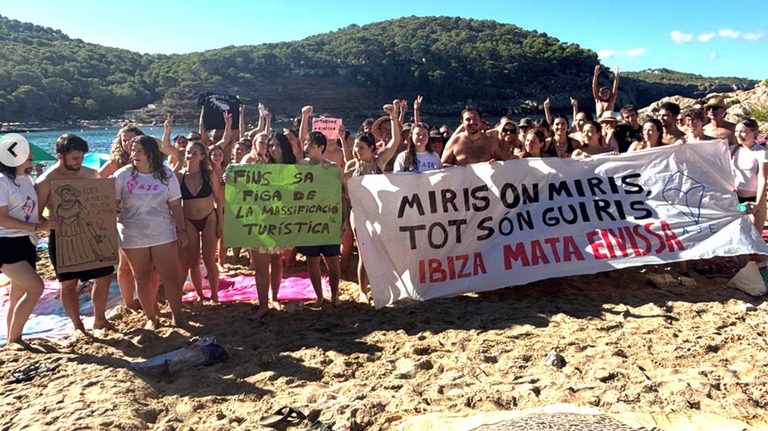
Last week, roughly one hundred residents of Ibiza gathered at Cala Saladeta, a well‑known beach on the island, to stage a peaceful occupation. The protest was organized by the Ibiza Youth Association, a local youth group, and was aimed at drawing attention to what they describe as an “extractive tourism model” that pushes locals out of both public and private spaces.
Why the protest?
According to the group’s manifesto, the surge of wealthy foreign visitors and famous partygoers has turned the island’s coves and beaches into overcrowded attractions. The youth association argues that this model has made housing, food and other essentials unaffordable for many residents, forcing them to give up spaces that should belong to the community.
In a statement quoted by local outlet Cadena SER, the protesters said, “Our land and our culture are being directly pushed out of public spaces, and increasingly out of private spaces, as well, displayed solely as tourist attractions.” They also handed out watermelon to passersby as a symbolic demand that locals be able to enjoy the island’s public areas again.
Local officials respond
Ibiza Island Council President Vicent Marí praised the island’s ongoing efforts to combat tourist overcrowding, calling Ibiza a “pioneer” in addressing the issue. While he did not detail specific policy changes, the council has previously explored measures such as a visitor tax aimed at curbing the influx of cruise ships and high‑volume tourists.
Broader context
The protest on Ibiza mirrors growing tensions across Spain’s Balearic Islands. Barcelona residents have recently taken to the streets to protest mass tourism, even using water guns against visitors, while Mallorca has seen viral videos of pickpockets targeting tourists in Palma. In the second quarter of 2025, Ibiza welcomed nearly 1.2 million tourists, according to the Balearic Islands Statistics Institute, a figure that swells the island’s population dramatically each summer.
Organizers hope the demonstration will spark a broader conversation about sustainable tourism that protects local culture, preserves affordable living costs, and restores public spaces for residents. They concluded their manifesto with a call to “reclaim places of tranquility, including during the summer,” urging both authorities and visitors to respect the island’s heritage and community needs.
Original reporting: Fox News (HLL/CB) — read the source article.