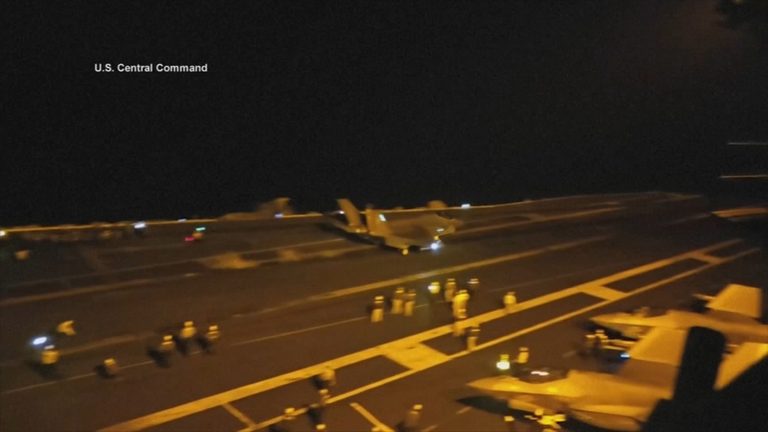
Iran announced Sunday that it struck an unmanned U.S. vessel attempting to navigate the strategic Strait of Hormuz, a claim the U.S. Department of Defense promptly labeled a “total lie.” The allegation marks the latest flashpoint in a renewed wave of hostilities that have surged since the war erupted on Feb. 28.
Recent exchanges of fire
Just a day earlier, U.S. forces said they hit three Iranian oil tankers in retaliation for a missile attack on Navy warships. The back‑and‑forth strikes have intensified after a brief lull that followed a June cease‑fire announcement, but fighting has persisted as diplomatic talks have stalled.
Casualties and broader impact
U.S. officials reported that at least five people were killed earlier this week during a U.S. bombardment of southern Iran. The conflict has also threatened the flow of oil and natural gas through the Hormuz waterway, a chokepoint that supplies a significant share of the world’s energy supplies.
Trump administration’s dual strategy
The Trump administration is pursuing a two‑pronged approach: direct military responses to attacks on the strait, while simultaneously targeting foreign financial institutions that facilitate Iran’s ability to move money. Tehran’s hard‑line leaders have signaled a willingness to endure further pressure, having weathered decades of sanctions.
Sanctions, shadow fleet, and nuclear talks
Iran has long found ways to circumvent sanctions, using a shadow fleet of vessels to transport oil to buyers despite U.S. blockades. The nuclear issue that sparked the war remains unresolved; negotiations that briefly resurfaced after a June memorandum of understanding collapsed shortly thereafter.
Diplomats from the United States, Britain, France, and Germany are reportedly working to refer Iran to the U.N. Security Council for non‑compliance with nuclear non‑proliferation obligations. Meanwhile, Tehran appears to be leveraging its control of the Hormuz strait to exert economic pressure, underscoring the waterway’s importance to global energy markets.
What’s next?
Both sides continue to accuse each other of aggression, and the risk of further escalation remains high. The Trump administration has emphasized that it will protect American interests and maintain the free flow of commerce through international waterways, while also pursuing financial measures to choke Iran’s ability to fund its war effort.
Observers warn that without a diplomatic breakthrough, the conflict could drag on, further destabilizing the region and threatening global oil prices.
Original reporting: Brookhaven News – ABC7 New York — read the source article.