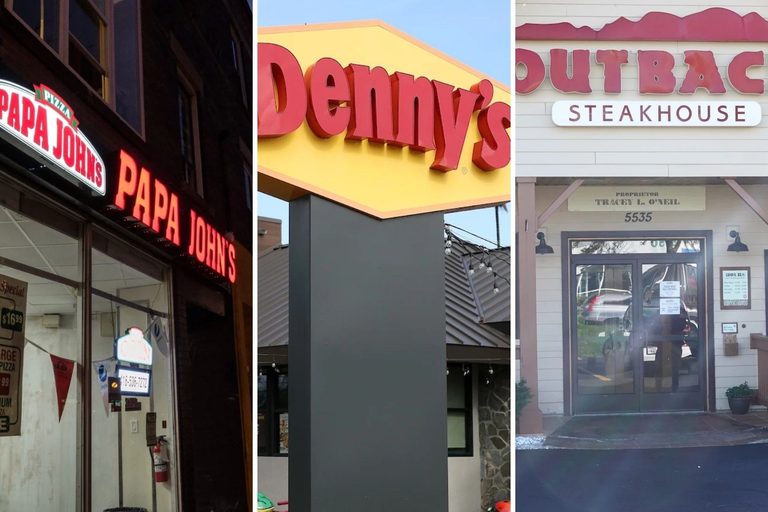
Across the United States, 2026 has already seen a wave of restaurant closures as chains trim under‑performing sites. While the overall number of locations remains high, many familiar brands are reducing their footprints to stay financially healthy.
Pizza chains lead the downsizing
Pizza remains the most frequently mentioned segment in recent reports of closures. A quick survey of industry news identified at least four pizza chains that have announced location reductions this year. Legacy brands such as Pizza Hut and Papa John’s are among those cutting back, with each potentially shuttering as many as 200 restaurants in 2026.
Industry analysts note that the pizza market faces heightened competition from fast‑casual concepts, delivery‑only operators, and changing consumer preferences. The pressure has forced even the biggest names to consolidate.
Other restaurant categories feel the pinch
Beyond pizza, a variety of other dining concepts are also scaling back. Steakhouses, casual diners, and specialty eateries have all reported location closures, though the exact numbers vary by brand. The trend mirrors broader economic factors, including rising labor costs, supply‑chain disruptions, and shifting spending habits among families.
One Business Insider report highlighted that Papa John’s may close an additional 100 restaurants in 2027, suggesting that the current wave of closures could extend into next year.
What this means for local communities
When a chain reduces its presence, the impact is felt locally. Employees may lose jobs, and neighborhoods lose a familiar dining option. However, the closures also open opportunities for independent restaurateurs and smaller businesses to fill the void, potentially revitalizing local economies with fresh concepts that better align with community tastes.
Consumers can still find many operating locations of these chains, but the reduced footprint underscores the importance of supporting local eateries that contribute directly to the vitality of neighborhoods.
Looking ahead
Industry watchers will continue to monitor how these closures affect the broader restaurant landscape. While some chains may stabilize after right‑sizing, others could face further reductions if economic pressures persist. For diners, the evolving market may bring more diverse options, but it also serves as a reminder of the challenges facing large‑scale food service operations in today’s economy.
Original reporting: News Talk 1340 KROC-AM – News and Talk – Rochester News Radio — read the source article.