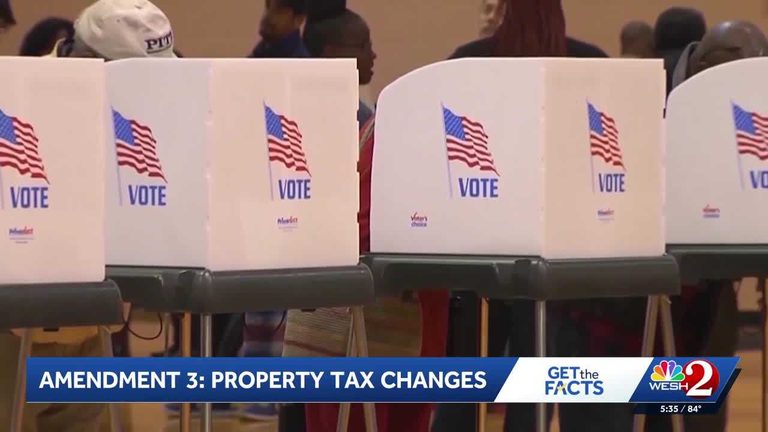
Florida residents will decide in November whether to adopt Amendment 3, a constitutional amendment that would eliminate the non‑school portion of the homestead property tax. The measure, championed by Governor Ron DeSantis, is being promoted as a way to lower the tax burden on homeowners while keeping school funding intact.
What Amendment 3 proposes
Amendment 3 would create a pathway to remove non‑school homestead taxes statewide. In practice, this means the portion of a homeowner’s property tax that funds local services such as law enforcement, fire protection, emergency response, and storm‑water management would be eliminated. The amendment does not affect the school tax levy, which remains funded by a separate homestead exemption.
DeSantis’ rationale
Governor DeSantis has framed the proposal as a step toward greater transparency and fairness in budgeting. “We are proponents of making policy and budgets more transparent for individuals,” DeSantis said, noting that the special legislative session earlier this year refined the language to protect school funding while still cutting other local taxes.
Critics point to misleading calculators
Dr. Esteban Santis of the Florida Policy Institute warned that the official website, SaveOurHomesFL.com, still shows savings based on cutting school taxes—a calculation that no longer reflects the amended language. “If you use that site, the savings displayed are wrong,” Santis said. He added that the site also references a state trust fund that would have provided grants to local governments, a provision that was removed from the final proposal.
Potential impact on local services
The Florida Policy Institute has produced its own county‑by‑county analysis showing how much revenue local governments could lose each year if Amendment 3 passes. Without a clear plan to replace the lost revenue, officials may be forced to cut services or raise other fees. “This is not so much savings, it’s really a cost shift for Floridians,” Santis explained.
What voters need to know
Amendment 3 requires a 60% supermajority to pass. Voters should consider both the promised tax relief and the possible consequences for essential community services. The official calculator may overstate savings, while independent tools highlight the revenue shortfall for counties and municipalities.
How to stay informed
Residents can compare the official website’s figures with the Florida Policy Institute’s map tool, which breaks down projected revenue losses by county. Engaging with both sources will help voters understand the full financial picture before casting their ballot.
Original reporting: WESH Orlando — read the source article.