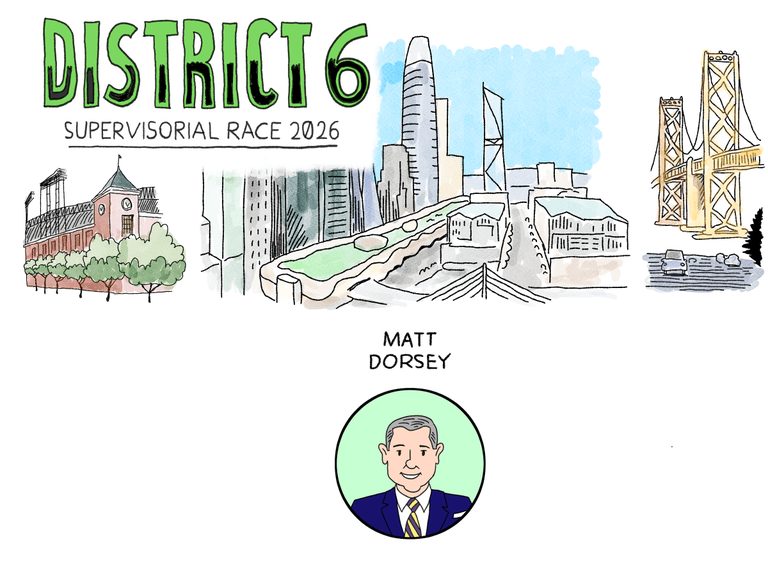
San Francisco voters in District 6 will decide in November whether incumbent Supervisor Matt Dorsey retains his seat. Dorsey, a 61‑year‑old longtime resident and renter, argues that the city’s growing use of police drones and automated license‑plate readers is a vital tool for public safety, yet he welcomes sensible limits to protect privacy.
Background on the technology
The San Francisco Police Department now operates more than 400 Flock license‑plate readers and a drone program that expanded after voters approved Proposition E in 2024. Those tools have been credited with helping solve a range of crimes, from vehicle theft to drug trafficking.
Current oversight framework
San Francisco already boasts some of the nation’s strictest privacy safeguards, including a voter‑amended Surveillance Technology Ordinance, an independent Department of Police Accountability, and a Police Commission. A 2019 ordinance requires city agencies to disclose the surveillance technologies they use and the policies governing them.
Proposition E, however, created exemptions that let police deploy drones and public‑safety cameras with fewer restrictions in certain situations, such as high‑speed chases, and allowed new surveillance tools to be used for up to a year before a use policy must be filed with the Board of Supervisors.
Recent controversies raise questions
Between 2024 and 2025, outside agencies improperly accessed the city’s Flock data 1.6 million times, including at least 19 searches on behalf of ICE, according to the San Francisco Standard. In June, the SFPD disclosed another 299 improper searches by federal and out‑of‑state agencies. Police have since cut off the access that enabled those searches, and the Department of Police Accountability and the Human Rights Commission are investigating the breach.
Drone footage has also faced scrutiny. This month, prosecutors dismissed a drug case after a defense attorney proved that what police thought was a drug handoff was actually a simple handshake.
Dorsey’s stance
Dorsey acknowledges the privacy concerns but stresses that safety technologies are “too important to a fair and functional justice system to tolerate abuses that could diminish public support or undermine its effectiveness.” He says he is “open to new guardrails that deter and punish misuses,” but will oppose any limits based on speculative harms that would prohibit tools that are demonstrably enhancing public safety.
He points to the city’s existing oversight mechanisms and argues that strengthening enforcement of those rules, rather than curtailing the technology itself, is the proper path forward.
What limits might look like
While Dorsey has not detailed specific policy proposals, he suggests that any new restrictions should focus on:
- Ensuring a single accountable entity monitors compliance with the surveillance ordinance.
- Requiring timely reporting of any improper data access to the public.
- Maintaining the ability of law‑enforcement to use drones and license‑plate readers in genuine investigations, while prohibiting indiscriminate, long‑term surveillance of law‑abiding residents.
Endorsements and election context
Dorsey is endorsed by Mayor Daniel Lurie, District Attorney Brooke Jenkins, Sheriff Paul Miyamoto, and State Senator Scott Wiener. He faces one challenger, Alex Behrend, who is not covered in this piece per editorial guidelines.
San Francisco’s District 6 includes SoMa, Mission Bay, Treasure Island, and Yerba Buena. Voters will weigh Dorsey’s record on public‑safety technology against concerns about privacy as they head to the polls.
Why this matters to families and faith communities
Strong, constitutionally sound policing protects neighborhoods where families live, work, and worship. At the same time, safeguarding the privacy of innocent citizens aligns with Christian principles of dignity and the constitutional right to be free from unreasonable government intrusion. Dorsey’s call for balanced oversight seeks to honor both safety and liberty.
Original reporting: Mission Local — read the source article.