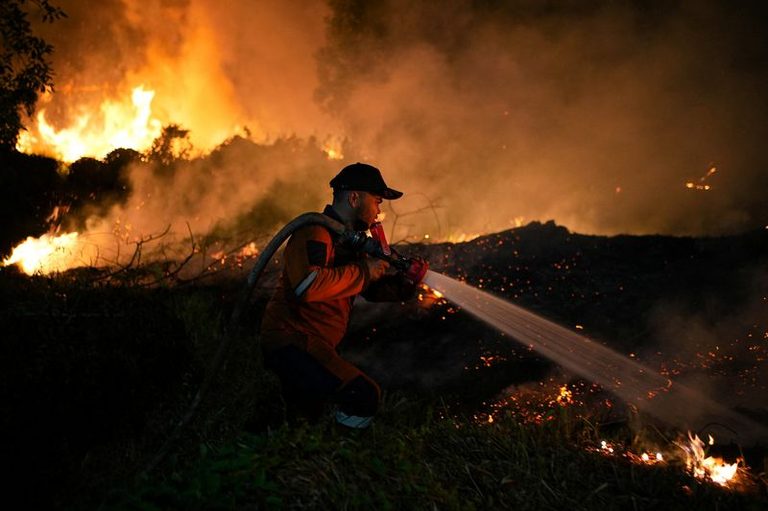
Jakarta – Indonesia’s fight against raging wildfires is entering its most critical phase as the super‑El Niño weather pattern reaches its peak this September, according to Forestry Minister Raja Juli Antoni. The minister said the drought‑inducing conditions created by El Niño are intensifying fires that have already burned about 200,000 hectares (494,210 acres) of forest and land since January.
Local impacts felt across the region
Smoke from the blazes has spread across six provinces on the islands of Borneo and Sumatra, prompting health officials to report a surge in respiratory illnesses. Thousands of schools in Indonesia and neighboring Malaysia were forced to shift classes online as air quality deteriorated to hazardous levels.
Government response and enforcement
Raja Juli said the ministry has stepped up enforcement, fining six forestry permit holders suspected of involvement in the fires and indicating that criminal investigations could follow. Satellite data revealed that 42 companies hold concessions with a high potential for igniting wildfires, according to senior Environment Ministry official Rizal Irawan.
To combat the flames, authorities have employed weather‑modification techniques to trigger rain and have deployed “water bombing” aircraft to douse hot spots. By the end of August, officials reported a reduction in active fire hotspots across Kalimantan and Sumatra, but warned that the battle is far from over.
Regional air quality concerns
The haze has also crossed borders. The Philippines’ environmental bureau reported that Manila’s air quality reached “very unhealthy” and “acutely unhealthy” levels on Tuesday. In Malaysia’s state of Sarawak, six monitoring stations recorded hazardous air quality readings.
Looking ahead
“Our problems are not over. September is the peak of El Niño,” Minister Raja Juli emphasized. “September is the main fight for us.” He urged both local communities and corporations to respect forest protection laws and to avoid actions that deliberately set fires.
While the government’s enforcement actions signal a tougher stance, the minister’s remarks underscore the need for continued vigilance and cooperation from all stakeholders to protect Indonesia’s forests, safeguard public health, and preserve the livelihoods of millions who depend on these ecosystems.
Original reporting: Appleton, WI News Feed (HLL/CB) — read the source article.