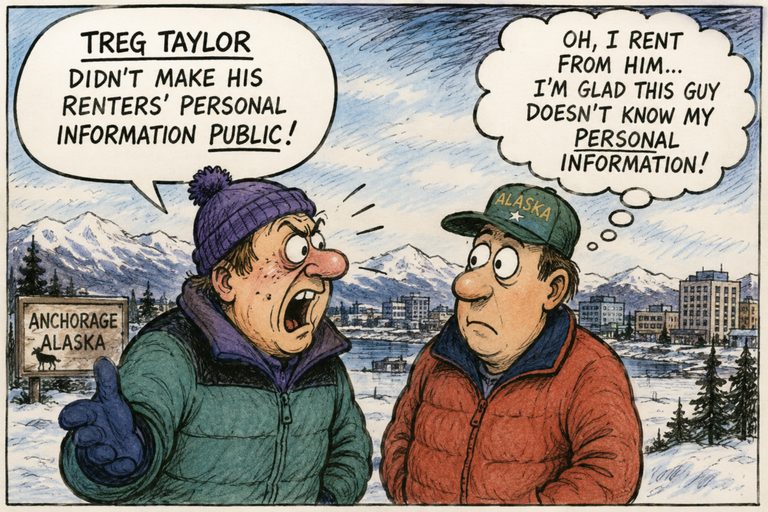
Anchorage, Alaska – The Alaska Public Offices Commission (APOC) has recommended that the state deny ballot certification to candidate Treg Taylor unless he discloses the full names of every customer who does business with his hotel, apartment complex, or food‑wholesale operation. The proposal, which would make private tenant information public, has drawn sharp criticism from community members who argue it overreaches and could deter qualified individuals from seeking office.
Privacy versus Transparency
Supporters of the recommendation say that full disclosure helps voters assess potential conflicts of interest. Critics, however, contend that the standard is unreasonable. “Are you kidding me, no!” one commentator wrote, emphasizing that past Alaska leaders—including former governors and business owners—were never required to reveal every customer’s identity.
Impact on Business Owners and Native Corporations
The proposed rule would affect not only Taylor, a hotel and apartment owner, but also any candidate who runs a sizable enterprise. Advocates for Alaska’s Regional Native Corporations warn that the measure could discourage leaders from those communities from running for office, fearing exposure of private business relationships that have little bearing on public duties.
Constitutional and Legal Concerns
Opponents argue that the requirement infringes on the constitutional right to privacy and could be seen as a form of political retaliation. They point out that the Alaska Constitution protects citizens from unwarranted government intrusion, and that the rule could set a precedent for future candidates to be excluded based on personal business data rather than policy positions.
Broader Election Issues
While the privacy question dominates the debate, many also note that Alaska’s elections face larger challenges, such as the influx of out‑of‑state money and unreported in‑kind contributions from labor unions. Critics suggest that the focus on Taylor’s tenant list distracts from these more pressing concerns about campaign finance transparency.
Calls for a Balanced Approach
Community leaders and former public officials urge APOC to adopt a more balanced standard—one that protects legitimate public‑interest disclosures without turning private tenant information into a political weapon. They propose limiting required disclosures to direct financial contributions, contracts, or ownership stakes that could directly influence a candidate’s official actions.
Next Steps
APOC is expected to hold a public hearing on the recommendation later this month, giving Alaskans an opportunity to voice their opinions. The commission’s final decision will determine whether Taylor appears on the ballot and could shape how future candidates with business interests are vetted.
What Residents Can Do
Alaskans who wish to weigh in can submit written comments to APOC or attend the upcoming hearing. By participating, voters help ensure that the balance between transparency and privacy reflects the values of a free and fair electoral system.
Original reporting: Must Read Alaska (Anchorage) — read the source article.