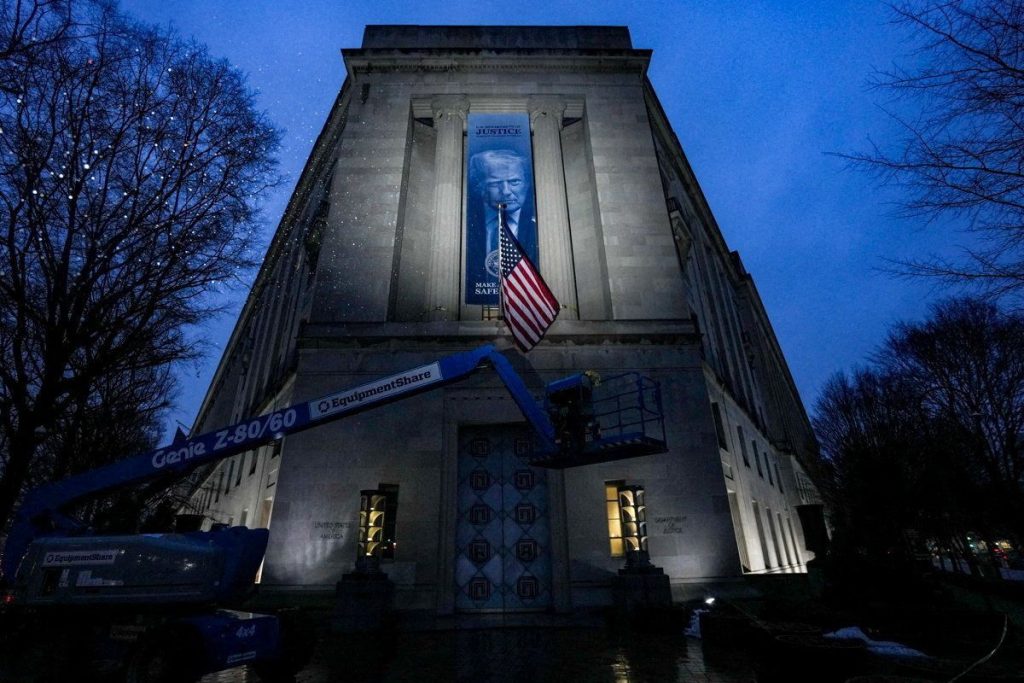
In a significant legal development, 35 former federal judges have come together to challenge the legality of a $1.776 billion fund established by a settlement involving former President Donald Trump. The fund, known as the ‘Anti-Weaponization Fund,’ was created to compensate individuals who claim they were wrongfully targeted by the government.
Legal and Political Implications
The retired judges, appointed by presidents from both major political parties, have filed a motion in a Miami court seeking to overturn a previous decision that dismissed a lawsuit brought by Trump, his son, and the Trump Organization against the Internal Revenue Service (IRS). The lawsuit had resulted in a settlement that led to the creation of the fund.
The judges argue that the lawsuit itself was fraudulent, as Trump was both a plaintiff and, as president, the head of the Executive Branch, which includes the IRS. They claim that the settlement was not legally justified and that the laws used to establish the fund require a legitimate litigation, not one that is collusive or feigned.
Judicial Review Sought
The judges are urging U.S. District Judge Kathleen Williams to reopen the case to determine whether she was misled about the existence of a legitimate case or controversy. Judge Williams, appointed by former President Barack Obama, had previously expressed concerns about the abrupt dismissal of the case and the unresolved issues surrounding it.
The Justice Department, represented by spokesperson Natalie Baldassarre, has dismissed the judges’ motion as frivolous, stating that it is routine for plaintiffs to dismiss cases without referencing any settlement.
Broader Context
This legal challenge adds to the growing scrutiny of the fund, which has also faced political pressure from some Republicans. Additional lawsuits have been filed in federal courts in Washington, D.C., and Virginia, arguing that the fund is unlawful and may violate federal transparency laws.
The judges’ motion does not address these broader claims but focuses on the alleged deception of the court. They argue that reopening the case would allow for a proper judicial review of the unprecedented circumstances surrounding the litigation and the settlement.
Original reporting: KTVZ (Central Oregon) — read the source article.