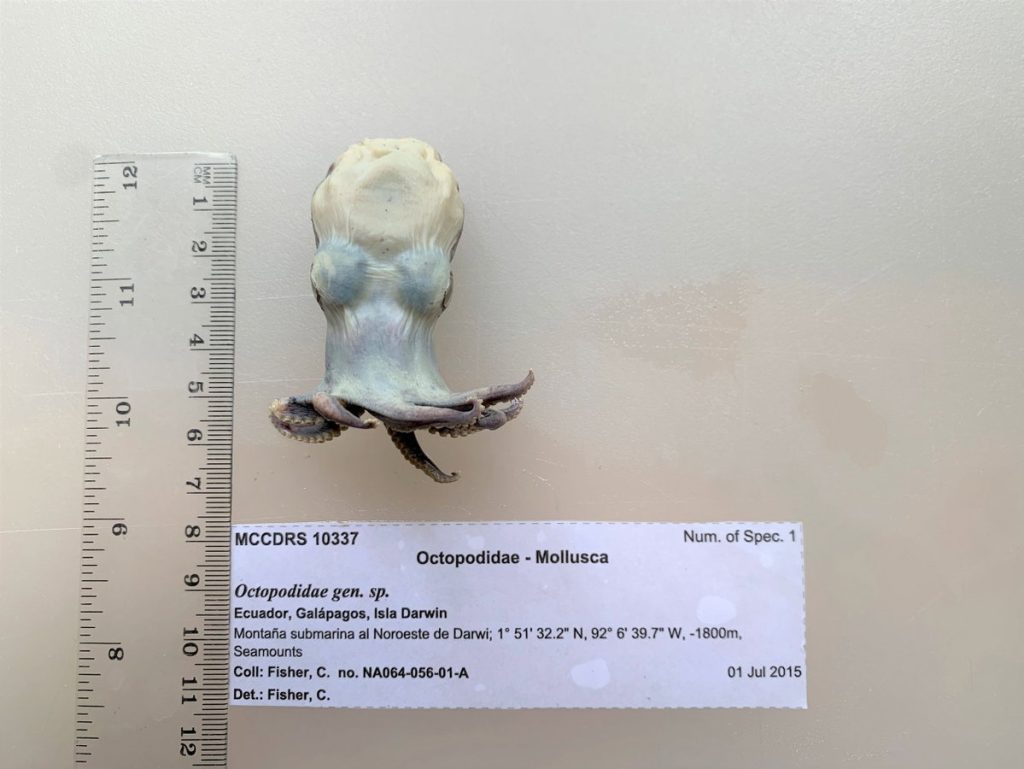
Scientists have unveiled a new species of octopus, Microeledone galapagensis, discovered in the Galápagos Islands. This tiny, blue cephalopod, fitting snugly in the palm of a hand, was first spotted in 2015 by a remotely operated underwater robot at a depth of 5,800 feet. The discovery highlights the rich biodiversity of the Galápagos, known for its unique marine life.
Discovery and Identification
The octopus was initially found by a team aboard the E/V Nautilus, working with the Charles Darwin Foundation and the Galápagos National Park Directorate. However, logistical challenges delayed its study until it reached the Field Museum in Chicago in 2022. Janet Voight, curator emerita of invertebrates at the museum, identified the octopus as a new species in a study published in the journal Zootaxa.
Voight utilized a CT scanner to examine the octopus’s anatomy without damaging the delicate specimen, which had been preserved in formaldehyde. This non-invasive method allowed her to place the octopus within the phylogenetic tree, revealing its close relation to another species, Microeledone mangoldi, found near New Caledonia.
Significance of the Discovery
The discovery of M. galapagensis underscores the Galápagos Islands’ role as a hotspot for endemic species, with more than 20% of its marine life found nowhere else. The octopus’s unique characteristics, such as its blue coloration and specific anatomical features, contribute to our understanding of deep-sea biodiversity.
Jim Barry, a senior scientist at the Monterey Bay Aquarium Research Institute, emphasized the importance of such discoveries in enhancing our knowledge of the ocean’s depths, which remain largely unexplored. The deep sea’s high rates of endemism and its role in ecosystem services like nutrient recycling and climate regulation make it a critical area for scientific study.
Despite the challenges posed by climate change, which is affecting deep-sea ecosystems, researchers like Voight continue to document new species, providing valuable insights into the evolution and diversity of marine life.
Original reporting: KTVZ (Central Oregon) — read the source article.