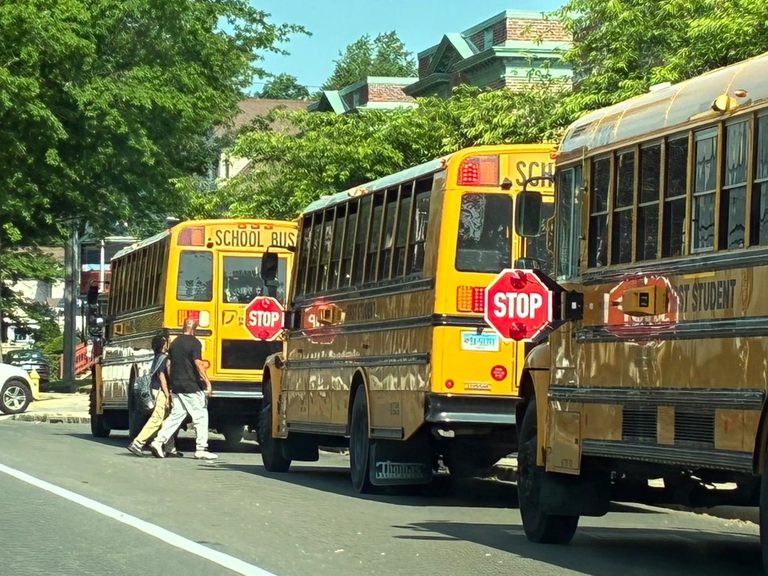
With the 2026‑27 school year just weeks away, New Haven officials are moving to address a growing backlog of traffic citations issued to drivers who illegally passed stopped school buses. The city’s Transportation Director, Haley Simpson, announced that the first appeal hearings will begin on September 10, giving motorists a chance to contest the $250 fines.
Summer surge in violations
Since the automatic‑enforcement cameras were installed on 344 city school buses earlier this year, more than 12,600 citations have been issued. Of those, 5,630 have been paid, while 1,308 are awaiting a hearing. The summer months alone saw an increase of roughly 4,000 violations, a rise Simpson attributes to earlier under‑reporting as the system required manual review of footage.
How the program works
The cameras, supplied by BusPatrol in partnership with the bus contractor First Student, capture images of any vehicle that passes a stopped bus. Citations are mailed to the registered owner and must be paid or appealed within 14 days. Unpaid citations that remain beyond the grace period trigger reminder notices after 30 days, but state law limits the city’s ability to add further penalties.
Funding and costs
New Haven pays BusPatrol $225 per bus each month, totaling $77,400 for the 344 equipped vehicles. In addition, the contractor receives $55 for every citation that is paid. Revenue generated from the fines is earmarked for public‑safety initiatives, reinforcing the city’s commitment to keeping children safe on the road.
Appeal process and hearing officers
Mayor Justin Murphy has appointed three independent hearing officers: local volunteer Lisa Brandes, law professor Joshua Galperin, and Assistant Corporation Counsel Earle Giovanniello. These officers are prohibited from working for the Transportation, Traffic, and Parking Department or the police department, ensuring an impartial review of each case.
Galperin, a professor of environmental law at Pace University and visiting faculty at Yale Law School, emphasized the balance between technology and human oversight. “The school‑bus camera program is important for creating incentives to drive more safely and protecting children, but there needs to be humans in the loop and an opportunity for recourse,” he said.
What this means for families
Parents and community members have expressed relief that the city is taking concrete steps to enforce safe driving around schools. By holding hearings, New Haven provides a transparent process for motorists to present evidence or explain circumstances, while reinforcing the principle that drivers must respect stopped school buses—a critical safety measure for children.
Next steps
Simpson noted that the city expects the hearings to run through the fall, addressing the remaining backlog of appeals. Drivers who have not yet responded to a citation are encouraged to review the notice carefully and either pay the fine or submit an appeal before the deadline.
The program remains active during summer school activities, as buses continue to operate throughout the town. City officials say the ongoing data collection will help refine the system and improve road safety for New Haven’s youngest residents.
Original reporting: New Haven Independent — read the source article.