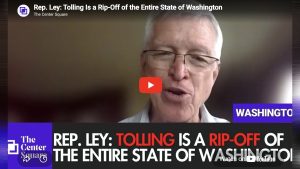
Rep. John Ley, a vocal critic of the Interstate Bridge Replacement (IBR) project connecting Oregon and Washington, has raised concerns about the potential for tolls to exceed initial forecasts. Ley, a Republican from Vancouver, compared the project to California’s high-speed rail initiative, which he described as a ‘boondoggle’ due to its escalating costs and delays.
Concerns Over Rising Costs
In a recent interview, Ley highlighted that the IBR project’s costs have ballooned from an estimated $3.2 billion to potentially $17 or $18 billion. He drew parallels to California’s rail project, which began with a $9.95 billion bond approved in 2008 but has yet to lay any track as of mid-2025.
Ley expressed skepticism about the inclusion of light rail in the new bridge design, suggesting that ridership estimates are overly optimistic and that it would not significantly reduce highway congestion. He warned that tolls could lead to a diversion of 40,000 to 50,000 vehicles onto Highway 205, creating further traffic issues.
Public Sentiment and Legislative Challenges
Governor Bob Ferguson has defended the project, emphasizing its importance for economic growth, public safety, and job creation. However, Ley pointed to a recent vote in Oregon where 83% of voters rejected a gas tax and fee hike, indicating resistance to additional tolls. Currently, tolling is only permitted on the I-5 Interstate Bridge in Oregon.
Washington law allows tolls on the new bridge to rise significantly, with current forecasts ranging from $1.55 to $4.50 per trip. Ley noted that the tolls could legally increase to $15, and potentially $18, as the project progresses.
With only $5.5 billion in secured funding, the IBR project faces a substantial financial shortfall. Construction is slated to begin in 2028, with completion expected around 2045. The tolls on the existing bridge will be used to fund the new construction.
Original reporting: Clark County Today (Vancouver WA) — read the source article.