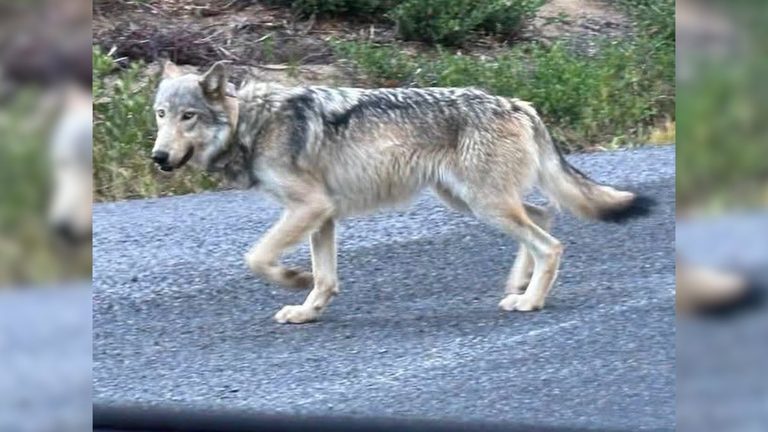
The Oregon Department of Fish and Wildlife (ODFW) confirmed that a young male gray wolf, fitted with a tracking collar, has been observed moving through Central Oregon. Officials describe the animal as healthy, mobile, and engaged in natural dispersal behavior—leaving its family pack to seek new territory and potential mates.
What dispersal means for the wolf and the community
Dispersal is a normal part of a wolf’s life cycle. During the summer months wolves tend to appear lean, which explains why some observers thought the animal looked thin. ODFW emphasized that the wolf’s current body condition is not a cause for concern.
Because the wolf is traveling along highways, it is at risk of vehicle collisions. ODFW and the nonprofit Think Wild recommend that drivers who see the wolf near a roadway honk briefly and make noise from inside the vehicle. This gentle hazing encourages the animal to move away from traffic while reinforcing its natural wariness of humans and cars.
How the public can help
Officials stress that feeding wildlife is dangerous. Providing food can habituate the wolf, reducing its instinctive fear of people and increasing the likelihood of future conflicts with homes, livestock, pets, or populated areas. Residents are asked not to approach, follow, or attempt to photograph the wolf up close.
Pet owners should keep dogs and other animals at a safe distance to avoid startling the wolf. If roadkill is encountered, Think Wild advises that it be removed only if it can be done safely, using gloves or a shovel, to keep the roadway clear and to prevent the wolf from becoming dependent on human‑provided carrion.
Why the guidance matters
Maintaining a respectful distance helps preserve the wolf’s natural behavior and protects motorists from potential accidents. By following ODFW’s recommendations, the community supports both wildlife conservation and public safety, aligning with Oregon’s long‑standing commitment to responsible stewardship of its natural resources.
For updates on the wolf’s movements or additional safety tips, residents can follow ODFW’s social media channels or contact the agency directly.
Original reporting: KTVZ (Central Oregon) — read the source article.