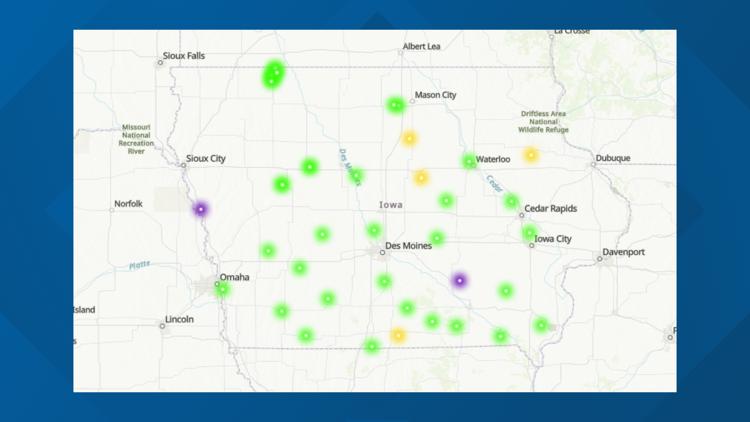
As summer kicks off and families across Iowa prepare for outdoor activities, the Iowa Department of Natural Resources (DNR) has issued a warning against swimming at four state beaches due to elevated E. coli levels. This advisory is crucial for local communities planning their summer outings.
State Beaches Affected
The DNR’s recent tests revealed that Backbone Beach in Delaware County, Beeds Lake Beach in Franklin County, Bobwhite State Park in Wayne County, and Pine Lake South Beach in Hardin County have all exceeded the single-sample limit for E. coli. As a result, the DNR advises against swimming at these locations to ensure public health and safety.
In addition to these state beaches, several county and city beaches have also reported high E. coli levels. These include Hannen Lake in Benton County, Hickory Grove Park Beach in Story County, Lake Iowa Park Beach in Iowa County, Malone Park Beach in Clinton County, Mormon Trail Park Beach in Adair County, and Treman Park Beach in Calhoun County. It’s important to note that not all city and county beaches conduct weekly tests, so families should remain vigilant about water quality before planning a visit.
Health Risks and Precautions
Swimming in water contaminated with E. coli can lead to various health issues, including diarrheal diseases, skin infections, ear infections, and respiratory problems. The DNR emphasizes the importance of adhering to these advisories to protect the health of individuals and families enjoying Iowa’s natural resources.
Furthermore, the DNR advises avoiding lake beds, even if they appear dry, as they can pose a risk of becoming stuck. This caution is particularly relevant during the swimming season when water levels may fluctuate.
Community Awareness and Action
Local communities are encouraged to stay informed about water quality updates from the Iowa DNR. By doing so, families can make informed decisions about where to swim and enjoy outdoor activities safely. The DNR’s commitment to monitoring and reporting on water quality is a vital service that supports the well-being of Iowa’s residents and visitors.
Original reporting: WQAD (Quad Cities) — read the source article.