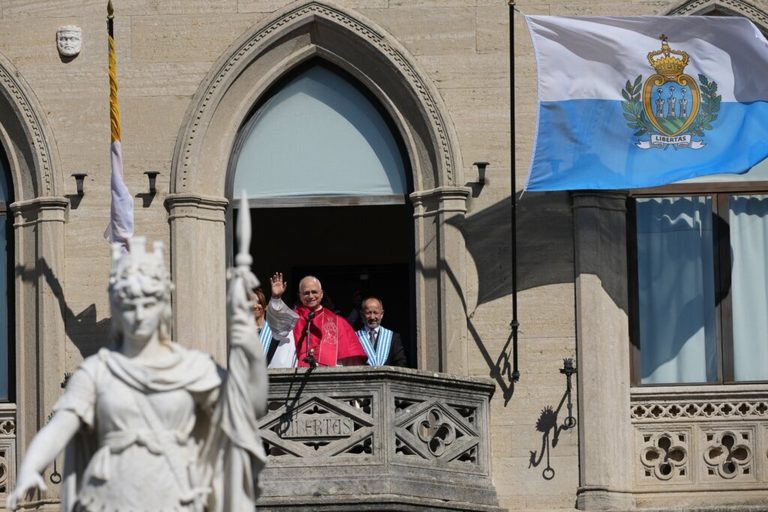
On Saturday, Pope Leo XIV spent a day in the Republic of San Marino, the world’s oldest surviving republic, and used the occasion to highlight the micro‑state’s political traditions as a model for modern societies. Speaking to local officials, the pontiff emphasized the importance of freedom, mutual respect and a shared commitment to the sacred will of God.
San Marino’s Historic Governance
San Marino, a tiny enclave of about 35,000 residents completely surrounded by Italy, traces its origins to the fourth century. Its government consists of a 60‑member parliament that elects two captains regent every six months to serve jointly as heads of state. This power‑sharing arrangement is designed to prevent the concentration of authority and to foster a culture of civic responsibility.
Leo noted that the republic’s centuries‑old institutions embody a “new community and political model, strongly characterized by the Christian principles of freedom, mutual respect and communion.” He argued that small political communities can teach larger nations valuable lessons about public service and social cohesion, especially at a time when many societies are experiencing growing division and distrust.
Papal Message on Human Dignity
The pontiff warned that modern societies face increasing threats from violence, social fragmentation and ideologies that prioritize self‑interest over the common good. “We live in a world wounded by many conflicts,” he said, citing rising violence, closures and fear of others. He called on Christians to respond with forgiveness, solidarity and concern for the vulnerable.
Leo also described San Marino as a “laboratory of good politics,” urging public life everywhere to uphold the dignity of every human person “from conception to natural death.” While he did not directly address San Marino’s 2021 referendum that legalized abortion during the first 12 weeks of pregnancy, his language reflects the Vatican’s longstanding opposition to abortion and euthanasia.
Community Resilience in the San Marino‑Montefeltro Region
Beyond political structures, the pope praised small communities in the San Marino‑Montefeltro region for their response to depopulation and loss of services. He highlighted examples of mutual support and cooperation that have helped these towns maintain essential services and preserve a sense of communal identity.
Leo’s visit marked the third papal trip to San Marino, following Pope John Paul II in 1982 and Pope Benedict XVI in 2011. The Vatican’s message underscores a broader call for societies—large and small—to prioritize human dignity, religious freedom and the common good in public policy.
Implications for Faith Communities
For faith‑based organizations and families, the pope’s remarks reinforce the importance of grounding civic engagement in Christian values. By pointing to San Marino’s power‑sharing model and its emphasis on mutual respect, Leo offers a concrete example of how religious principles can shape effective governance.
Local churches and faith groups are encouraged to consider how their own communities might emulate San Marino’s collaborative spirit, especially in areas such as volunteerism, charitable outreach and the protection of vulnerable populations.
Overall, the papal visit served as both a celebration of San Marino’s historic commitment to liberty and a reminder that the pursuit of the common good remains a central tenet of the Christian faith.
Original reporting: Alexandria, VA News – WTOP News — read the source article.