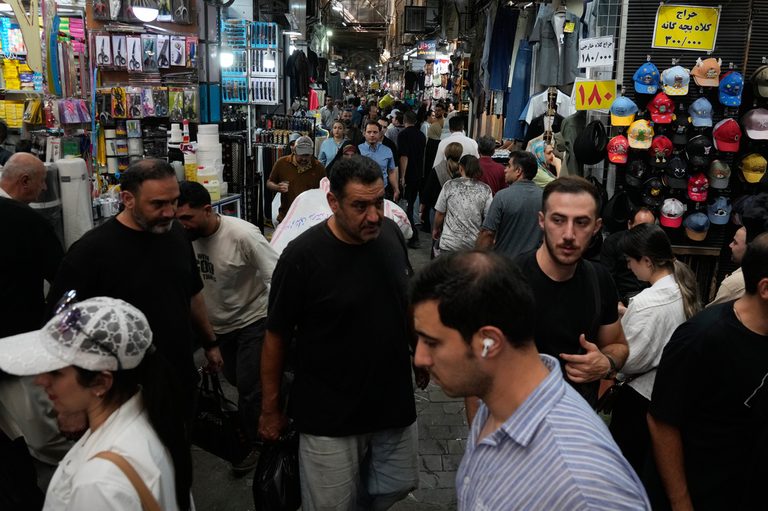
Washington announced a new round of economic sanctions and a reinforced naval blockade aimed at Iran, intensifying the pressure that began after the war started in February. President Donald Trump used social media to declare the upcoming measures the “most crushing economic operation ever taken against any country,” and warned that secondary sanctions could hit nations and companies that continue trading with Tehran.
Impact on Iranian households
Despite Iran’s grocery stores remaining stocked, many families are struggling to afford basic goods. Unemployment is reported at 9.1%, though analysts believe the true rate is much higher. Ahmad Karimi, a 52‑year‑old taxi driver and father of two, said he works 15‑hour days and has cut out fruit, protein, and leisure activities to make ends meet. A mother of two from northern Iran posted that a modest shopping trip for milk, eggs, and toilet paper cost about 89 million rials (≈$65), with meat unavailable.
Prices have surged dramatically; rice is 60 % more expensive and beef 150 % higher than before the war. The International Monetary Fund projects inflation nearing 70 % by year‑end and a contraction of more than 5 % in Iran’s economy.
Sanctions strategy and Iranian response
The United States and Israel have maintained the sanctions and blockade to limit Iran’s ability to export oil, its primary revenue source. Iran has adapted by expanding domestic production, using informal cross‑border trade, purchasing restricted goods through third countries, and employing a shadow fleet to move oil.
Experts note that Iran’s “resistance capacity” helps avoid economic collapse and limits the political pressure the U.S. expects. Tehran continues to attack oil‑rich neighbors and U.S. bases in the region, and it has disrupted shipping in the Strait of Hormuz, raising global energy prices.
Political dynamics
Iran’s elected government, led by President Masoud Pezeshkian, has expressed a preference for a negotiated end to the conflict, citing concerns for citizens’ livelihoods. However, the Revolutionary Guard remains a dominant force, pushing for greater concessions, including control over the Strait of Hormuz and financial compensation.
In response to the sanctions, the United Arab Emirates announced a suspension of all trade with Tehran, a move preceded by a call from President Trump to the UAE’s leader.
Human toll
Beyond economic hardship, Iranians report an emotional toll from having to deny basic needs to their children. The government has slightly eased mandatory hijab enforcement, reflecting some sensitivity to public sentiment, but economic constraints dominate daily life.
As the war continues, analysts caution that Iran may endure the sanctions longer than the United States anticipates, potentially prolonging the conflict without immediate political concessions.
Original reporting: KTSA News/Talk (San Antonio) — read the source article.