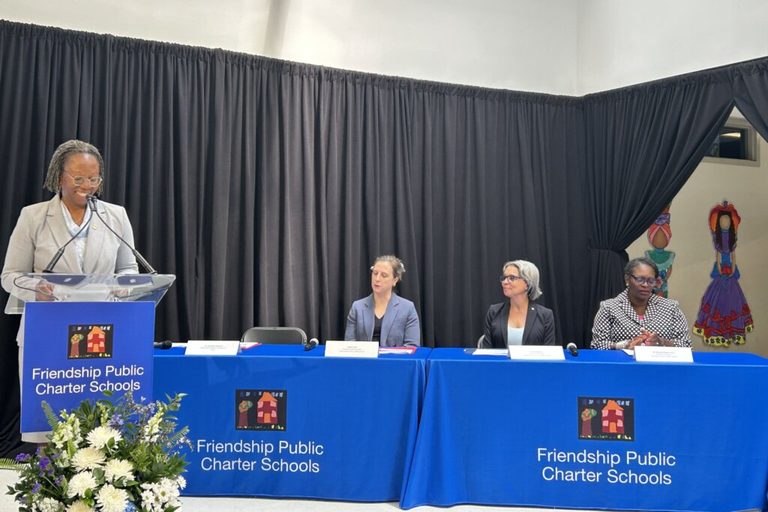
At a Thursday briefing, the District of Columbia Office of the State Superintendent released the latest results from the citywide CAPE standardized tests, which are administered each spring to students in grades three through twelve. The data show modest improvements but also highlight areas where the system has yet to return to pre‑COVID performance.
Reading and math proficiency modestly higher
Reading proficiency rose 2%, bringing the overall on‑grade‑level rate to 39.6% – the highest level recorded since 2015. Math proficiency increased 2.1%, reaching 28.5% of students. Both figures remain below the levels seen before the pandemic, and officials stressed that the gains, while encouraging, are not yet sufficient.
Grade‑level trends
Eighth‑grade readers posted the strongest growth, with a 5.7% jump in proficiency. Conversely, fourth‑grade reading scores slipped 0.4% and high‑school reading fell 1% compared with 2025. In mathematics, third‑grade students led the way with a 6.8% increase, while high‑school math scores dipped 0.2% and middle‑school grades showed modest gains.
Factors behind the improvement
State Superintendent Antoinette Mitchell attributed the steady rise to several initiatives, including high‑impact tutoring programs, expanded teacher training materials, and targeted support for students transitioning into middle and high school. More than 4,700 students received high‑impact tutoring in reading and math last year, with the program emphasizing small‑group or one‑on‑one instruction.
Students who logged at least 20 hours of tutoring were more likely to improve their assessment scores and maintain regular attendance, according to district documents. The district also announced a new grant‑funded partnership aimed at reducing chronic absenteeism, set to launch in September.
School‑level successes
Within the District’s public‑school system, 86 schools reported higher math proficiency and 64 schools saw gains in reading during 2026. Chancellor Kim Jackson highlighted the rollout of dyslexia screening tools, new subject‑specific materials, and transition academies for sixth‑ and ninth‑grade students moving to new campuses.
Public charter schools posted a 2.6% rise in reading proficiency and a 1.5% increase in math proficiency.
Teacher perspectives
Ideal Middle School teacher Alise Webb described how focused attention on a small group of eighth‑graders helped raise reading proficiency from 42.9% in seventh grade to 76.9% in eighth. Webb emphasized the value of individualized feedback and peer‑review exercises in building student confidence.
Fifth‑ and sixth‑grade math teacher Everton Nelson reported that his students, including those experiencing homelessness, achieved a 40% math proficiency rate—more than three times the district average for that demographic. Nelson credited consistent engagement and real‑world applications of math concepts for the improvement.
Looking ahead
Mitchell concluded that while the district is “encouraged, but not yet satisfied,” continued collaboration among educators, families, and community partners will be essential to close the gap with pre‑pandemic performance levels.
Original reporting: Alexandria, VA News – WTOP News — read the source article.