Six million people in Somalia are now confronting acute food insecurity, according to the World Food Programme (WFP). WFP executive director Carl Skau told the Associated Press during a visit to a nutrition center on the outskirts of Mogadishu that the agency has only about one‑tenth of the funding it possessed in 2022, when it helped avert a famine.
Funding shortfall limits assistance
Skau said the reduced budget is the result of cuts by international donors and a shift of resources to other humanitarian emergencies. With far fewer resources, the WFP can provide only the most basic nutrition supplies, focusing on the children who are worst affected.
The agency projects that 1.9 million children under five will suffer acute malnutrition this year, including nearly 500,000 who will need urgent treatment for severe acute malnutrition. Overall, roughly 30 % of Somalia’s population is experiencing critical levels of food insecurity.
Families on the front lines
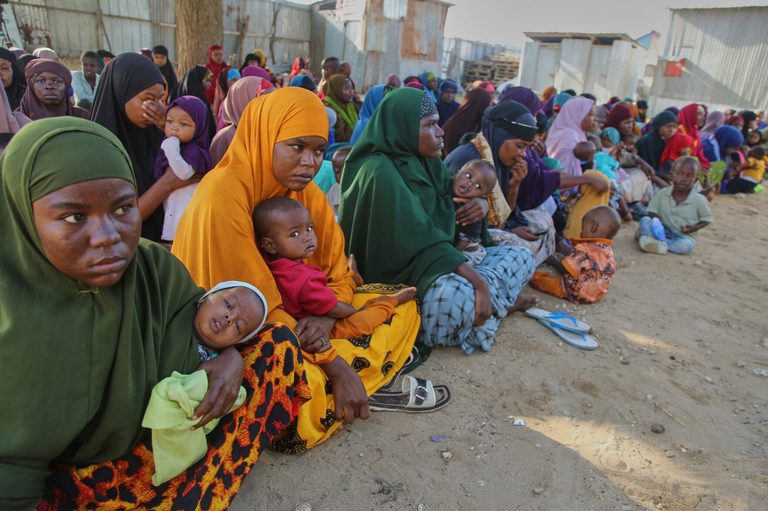
At the Feynuus Health Center in Mogadishu’s Kahda district, dozens of women with babies wait under a tree or along the veranda for assistance. Inside, health workers weigh children in blue slings, screen them for malnutrition and hand out therapeutic food.
One mother, Halima Mohamed Hassan, walked nearly three kilometres carrying her malnourished four‑year‑old child. She is pregnant and says she has not eaten in two days, surviving only on plain rice. Health workers treated her child with a nutrient‑dense formula, but Hassan says her other children remain malnourished and she could not bring them all to the center.
Hassan fled the Lower Shabelle region four months ago after her husband died of malnutrition. She and her children walked for four nights before reaching an internally displaced persons camp on the outskirts of Mogadishu. Now she shares a makeshift shelter with her widowed mother and four of her mother’s children, and the two women look for occasional laundry work to feed a household of twelve.
Strain on local health services
Abdirahman Barkhad, program director of Youth Link Somalia, said the Feynuus center sees between 250 and 350 patients daily, mainly displaced women and children from outside Mogadishu. About ten nearby health and nutrition centers have closed because of the funding reduction, increasing pressure on the remaining facilities.
Mohamud Moallim Abdulle, commissioner of the Somali Disaster Management Agency, described the situation as “extremely alarming.” He estimates 1.85 million children are malnourished, six million people are affected by drought, and two million urgently need assistance.
Drivers of the crisis
Skau reported that mothers he met in the town of Burhakaba cited drought, insecurity and rising food prices as the main drivers of the crisis. Some families have lost their crops and been forced to flee, while others walk three to four hours to reach health facilities because aid workers cannot reach them safely.
Insecurity from the long‑standing al‑Shabab insurgency makes humanitarian operations more expensive, requiring the WFP to use aircraft in areas where road travel is unsafe. Conflict in the Middle East also contributes to higher fuel and food prices, limiting agricultural supplies and diverting donor attention to other emergencies.
Looking ahead
Skau emphasized that the WFP has the experience and capacity to respond, but without additional resources it can only do the “bare minimum.” He urged donors to restore funding so that the agency can expand its assistance and prevent a full‑scale famine.
For more coverage of African development, visit the AP Africa Pulse hub.
Original reporting: KTBS 3 (Shreveport) — read the source article.