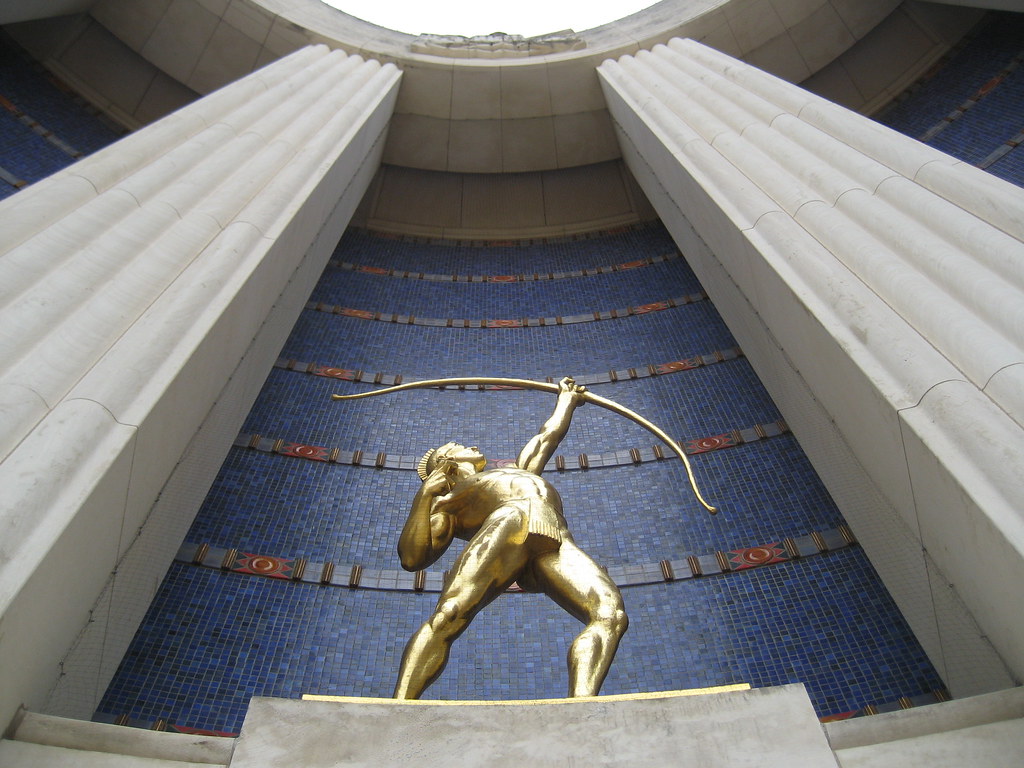
There is a moment, just as you climb the broad limestone steps and pass beneath the great bronze doors of the Hall of State, when Dallas stops feeling like a modern metropolis and starts feeling like something mythic. That is not an accident. This building was designed in 1936 to make you feel exactly that way — and nearly ninety years later, it still delivers on every square inch of that promise.
Fair Park sits in East Dallas, about ten minutes from downtown, and it is one of the most underappreciated cultural campuses in the entire American South. The grounds are a National Historic Landmark, home to the largest collection of Art Deco exposition architecture in the country, all of it surviving intact from the 1936 Texas Centennial Exposition. At the center of it all, anchoring the esplanade like a temple to Texas pride, stands the Hall of State — and it is the kind of place that makes you wonder why you waited so long to visit.
The building’s exterior alone is worth the trip. Massive limestone walls, geometric friezes, and a monumental colonnade give it the gravitas of a Roman forum, while the Art Deco detailing — sculpted eagles, stylized lone stars, sweeping lines — roots it firmly in that electric, optimistic decade when Texas was celebrating a century of independence. Before you even walk inside, take a slow lap around the reflecting pools and let the scale of the thing settle over you.
Inside, the Great Hall stops visitors cold. A soaring barrel-vaulted ceiling, gold-leaf murals depicting Texas history, and six heroic bronze statues of regional figures line the walls in a room so dramatic it feels like standing inside a cathedral built for a sovereign state. Because, in a way, it was. Every detail — the custom terrazzo floors, the hand-carved wood panels, the painted friezes — was commissioned by the state of Texas to declare, loudly and beautifully, that this place mattered.
The Hall of State is managed by the Dallas Historical Society, which maintains rotating and permanent exhibits exploring Texas and Dallas history in the chamber rooms branching off the main hall. You can spend a focused hour here or drift easily into two, reading about the city’s founding, its booms and reinventions, and its complicated, fascinating place in American culture.
Admission is free, which feels almost absurd given the quality of what you experience. Parking is easy, especially outside of the State Fair of Texas season. If you go on a weekday morning, you may have the Great Hall almost entirely to yourself — just you, the gold murals, and the quiet, enormous ambition of a building that was built to last forever.
Dallas has no shortage of world-class museums and gleaming new attractions. But the Hall of State reminds you that this city has always dreamed large — and that some of its most extraordinary spaces are the ones that have been here all along, waiting patiently for you to notice them.