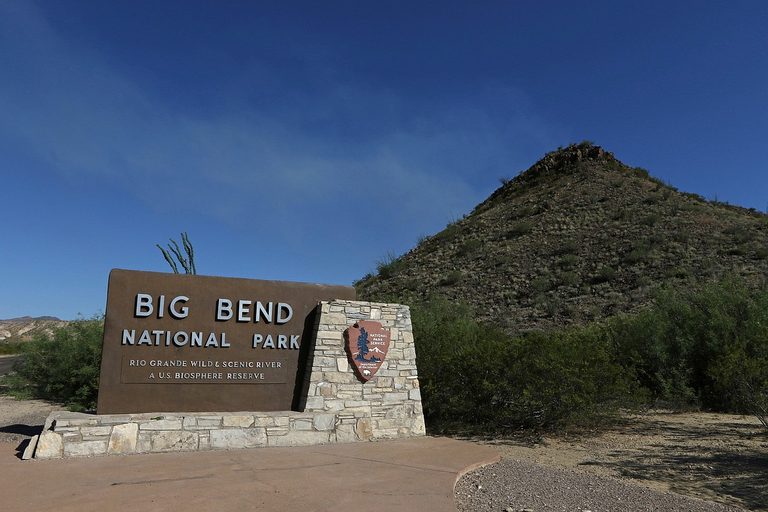
Washington – On Monday, Customs and Border Protection (CBP) head Rodney Scott announced a brief suspension of construction on the federal border‑security project that would extend through Texas’ Big Bend National Park. Scott said he would travel to the park in the coming days to conduct a personal, on‑the‑ground evaluation and meet with local officials, community members, and other stakeholders.
Local leaders welcome the pause
The pause comes after months of bipartisan opposition from Texas sheriffs, elected officials, park officials, and residents who argue the project threatens the park’s pristine landscape and could damage archaeological sites and Native American burial grounds. Brewster County Sheriff John (last name not provided) confirmed he will meet with Scott and expressed relief that the CBP commissioner will see the terrain firsthand.
Bob Krumenaker, former superintendent of Big Bend National Park and chair of the nonprofit Keep Big Bend Wild, said he was “wary but optimistic” about the temporary halt. He noted that the project has drawn criticism from both Democratic and Republican officials, as well as from conservation groups who fear irreversible damage to the park’s rugged cliffs, canyons, and night‑sky viewing areas that attract tourists.
Project details and federal backing
The broader border‑security initiative, funded by a $46 billion congressional appropriation last summer, aims to build a wall from the Pacific Ocean to the Gulf of Mexico. While the administration has waived numerous regulations to accelerate construction, the segment in Big Bend has faced particular scrutiny. Earlier this year CBP backed away from a 30‑foot‑tall bollard wall in the park but continued to plan a new access road, lighting, vehicle‑blocking barriers, and buried fiber‑optic surveillance technology.
Scott has indicated that the first layer of the wall is expected to be completed by the end of next year, though no timeline was given for how long the current pause will last. CBP declined to comment on the specific meetings or the duration of the suspension.
State officials weigh in
Texas Governor Greg Abbott said he discussed the pause with Homeland Security Secretary Markwayne Mullin over the weekend. Abbott reported that Mullin assured him no wall or barriers would be erected inside the park, though the governor did not address concerns about the proposed road.
Sen. John Cornyn, a Republican from Texas, wrote to Secretary Mullin emphasizing that the natural terrain of Big Bend—its steep mountains, deep canyons, and expansive desert—already serves as a deterrent to illegal migrants. Cornyn’s constituents, he argued, rely on that natural barrier rather than additional construction.
Opposition remains strong
Conservation groups, including the Center for Biological Diversity, have sued the Department of Homeland Security over the agency’s broad waivers that allow rapid construction. Laiken Jordahl of the organization called the pause “welcome news” but warned that construction could resume at any moment.
Native American groups have also voiced concerns that wall contractors could disturb sacred sites. A Catholic archdiocese in the El Paso area has similarly objected to construction that it says mars an important religious site.
What comes next?
Activists plan to monitor the situation closely, watching for any removal of equipment such as bulldozers and for a clear, transparent plan from CBP. The pause is seen as a rare concession from an administration that has made rapid border‑wall construction a signature promise.
As the federal government pushes ahead with border‑security measures along the roughly 2,000‑mile U.S.–Mexico border, the Big Bend pause highlights the tension between national security objectives and local concerns for environmental preservation, cultural heritage, and community livelihoods.
Original reporting: Texarkana Gazette — read the source article.