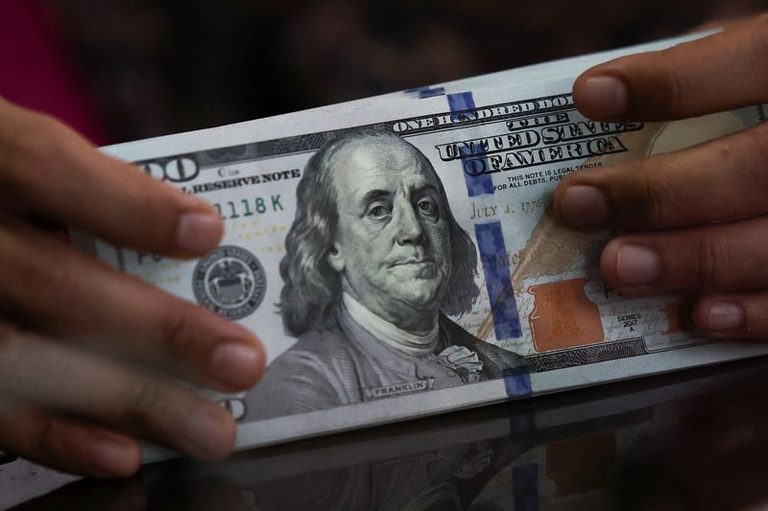
The U.S. dollar remained near multi‑month lows against most major currencies on Tuesday, reflecting a shift in market expectations for Federal Reserve policy and lingering concerns about the conflict in the Middle East.
Currency moves
In early Asian trading, the euro was quoted at $1.1581, just shy of the two‑month peak of $1.1614 reached on Monday. The British pound traded at $1.3548, slightly below the three‑month high it touched in the previous session. These modest gains for the euro and pound came as traders reduced the perceived likelihood of an imminent Fed rate increase.
Fed rate‑hike odds fall
Data released last week showed U.S. retail sales fell in July for the first time in nine months, following unexpected job losses and modest inflation readings. The softer economic data prompted investors to lower the probability of a rate hike at the Fed’s September meeting from 52.2% to 35%, according to the CME FedWatch tool.
Despite the reduced odds, analysts cautioned that inflation remains above the Fed’s 2% target and could stay elevated if supply‑side shocks persist. Nohshad Shah, head of EMEA fixed‑income sales at Citadel Securities, noted that “inflation has been above target for most of the past five years, and while a 2% pace may be acceptable, it leaves little breathing room in a world of constant supply shocks.”
Middle‑East tensions add uncertainty
The market’s fragile sentiment was further strained by developments in the U.S.–Iran conflict. A senior Iranian official told Reuters that Iran would adopt a “fully offensive” military posture after negotiations for a permanent end to the war stalled, while Washington signaled it would not extend the June cease‑fire agreement.
Analysts warned that a prolonged closure of the Strait of Hormuz could keep oil prices elevated, adding pressure to global inflation and financial markets.
Bond and commodity markets
Bond yields around the world rose as traders priced in higher inflation expectations and the risk of continued oil price pressure. The 30‑year U.S. Treasury yield hovered near its highest level in almost two decades, and Japan’s 10‑year government bond yield reached its highest point since September 1996.
Brent crude futures edged up 0.3% to $91.14 a barrel after hitting a weekly high on Monday. The yen remained just below the 160 per dollar mark, prompting focus on the Bank of Japan’s upcoming policy meeting, where officials are expected to raise rates and consider more aggressive hikes.
U.S. Treasury financing concerns
Recent Treasury auctions highlighted investor concerns about the growing size of U.S. debt and the government’s fiscal trajectory. Anthony Saglimbene, chief market strategist at Ameriprise Financial, said investors are “increasingly focused and concerned about the growing amount of U.S. debt and America’s lack of fiscal discipline,” noting that large‑scale auctions give the bond market an opportunity to push back on government borrowing by demanding higher yields.
Overall, the dollar’s modest strength, reduced Fed rate‑hike expectations, and heightened geopolitical risk created a cautious market environment on Tuesday, with investors watching upcoming economic data, Fed communications, and developments in the Middle East for further direction.
Original reporting: Appleton, WI News Feed (HLL/CB) — read the source article.