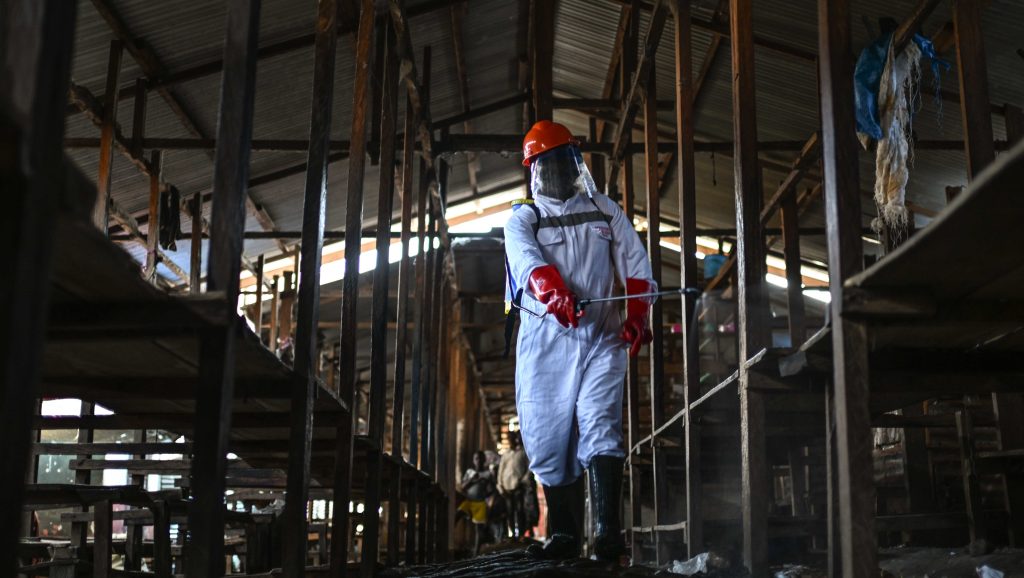
An Ebola treatment tent in Congo was set on fire for the second time this week, and 18 people suspected of infection escaped, a local hospital director said Saturday. The attack highlights a dangerous mix of fear, community mistrust and fragile outbreak control as health workers try to contain the virus. Officials are facing a race to locate those who fled and to secure treatment sites against further violence in the region. The situation in Congo is tense, fluid and potentially explosive for public health responders.
The burned tent was part of an emergency response set up to isolate and treat suspected Ebola cases, but repeated attacks have undermined those efforts. Health teams rely on tents to create immediate spaces for care in remote or overwhelmed facilities, and when those shelters are destroyed the entire containment strategy weakens. The arson not only damaged property but also sent patients and staff running, scattering people who may need urgent treatment. That makes tracking and treatment exponentially harder.
When 18 people suspected of having Ebola escaped after the fire, it created a serious public health challenge for local responders. Each person who leaves isolation unmonitored raises the risk of new chains of transmission in towns and villages that may already be struggling with weak healthcare infrastructure. Contact tracing becomes much more complicated, and communities without access to rapid testing or treatment face heightened danger. Authorities must move quickly to find and care for those individuals before the situation worsens.
Community mistrust is often at the heart of these violent episodes, and understanding that distrust is essential to preventing more attacks. Misinformation about the disease, fears of quarantine, and past grievances with clinics or officials can all fuel hostile reactions to outbreak response teams. Effective containment requires not just medical care but also clear communication, cultural sensitivity and engagement with local leaders. When people feel respected and informed, they are more likely to accept help instead of resisting it.
Security for treatment sites is now as important as medical supplies and trained staff, and responders are scrambling to balance care with protection. Additional guards or coordinated escorts can help, but heavy security alone does not solve the root issues driving attacks. Investing in community outreach, rapid testing, and safe transport for patients can reduce the need for desperate measures that lead to violence. At the same time, temporary reinforcements may be needed to prevent immediate repeat incidents while trust is rebuilt.
Health teams also face the logistical nightmare of replacing destroyed equipment and re-establishing isolation zones under pressure. Supplies that are lost to arson may take valuable days to replace, delaying treatment for new patients who show up needing care. Teams must triage needs, prioritize the most urgent repairs, and find safe locations to continue services without interruption. The longer these gaps persist, the greater the chance that the outbreak could spread beyond current hotspots.
Locally driven solutions tend to work better than externally imposed ones, and that holds true in outbreak response. When community elders, religious leaders and local health workers are involved in planning and communication, people are less likely to panic or resist. Training community volunteers in safe referral practices and simple protective measures can bridge the gap between formal health systems and households. Those relationships take time to build but pay off by preventing scenes like tents being torched and patients fleeing into the streets.
Tracking down the 18 people who left the site will require a mix of public health techniques and local cooperation. Contact tracers need accurate information, community members need assurance they won’t be punished, and patients need clear, safe options to return for care. Mobile teams, temporary clinics and targeted information campaigns can help bring people back into care pathways without increasing fear. Every successful re-engagement is a step toward stopping further spread.
The attack is a stark reminder that epidemic response is never only medical; it is social, political and logistical all at once. Protecting health workers and patients, restoring damaged treatment capacity, and repairing trust with communities will be immediate priorities for responders in Congo. If those pieces can be addressed alongside the clinical response, the odds of containing the outbreak improve. For now, the focus is on urgent recovery and preventing further violence that could undo weeks of work.