Grocery shopping is a routine errand for most, but it can also be a place where accidents happen. According to the Centers for Disease Control and Prevention (CDC), accidental falls are a leading cause of unintentional injury in the United States. Over 410,000 people died from fall-related injuries over a recent 10-year period.
Premises Liability
Premises liability is a branch of state tort law that allows a person to pursue compensation when a hazard causes them harm. In a premises liability or slip-and-fall claim, the accident victim generally must prove a property owner or other liable party was negligent in their management of the property.
The Legal Information Institute at Cornell Law School states that proving negligence generally requires establishing five elements. Each state has a deadline for filing a slip-and-fall claim, known as the statute of limitations. People injured in grocery store slips, trips, or falls must file suit before the limitations period expires or risk losing their right to pursue compensation in court.
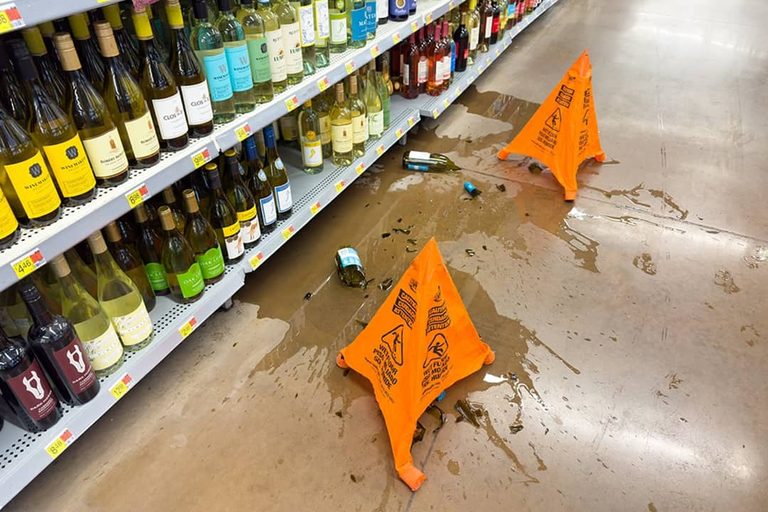
Common causes of slips, trips, and falls in grocery stores include uneven surfaces, cluttered aisles, loose or damaged floor mats, or the absence of floor mats in bad weather. Without regular inspections, proper housekeeping, clear cleanup policies, and placement of warning signs to notify customers of hazards, grocery stores can face potential liability for customer injuries.
Original reporting: KTVZ (Central Oregon) — read the source article.