This piece follows the strange case of the man once known as Benjaman Kyle — later identified as William Burgess Powell — who was found behind a Burger King in Georgia and claimed to have no memory of his past. Filmmakers Eric and Shannon Evangelista, joined by retired FBI official Ken Maxwell, dug into gaps that stretch from Lafayette, Indiana, to Colorado as they tried to trace Powell’s life between the early 1980s and his 2004 discovery. The story tracks the airing of a new four-part Investigation Discovery docuseries and the unanswered questions that keep pushing investigators forward.
In August 2004 a man was discovered unconscious behind a Burger King in Georgia, naked and bloodied, and hospital staff nicknamed him “B.K. Doe.” He eventually began calling himself Benjaman Kyle and said he could not remember who he was, a condition described by doctors as retrograde amnesia. Eric and Shannon Evangelista later took on his case, initially aiming to reconnect him with family and to document the search for identity.
The four-part docuseries, which premiered on May 25 on Investigation Discovery, follows the Evangelistas as their hunt expands into thornier territory. At first the story seemed straightforward: a man with significant memory loss needing help. As they pursued leads, however, new details surfaced that made the case stranger and more complex than anyone expected.
After a long search, the man was identified in 2015 as William Burgess Powell, a revelation that shifted the investigation in unpredictable ways. Powell has not been charged with any crime, and no public criminal record has materialized tying him to violent wrongdoing. Still, the Evangelistas and their advisers found inconsistencies that raised questions about the origins of his memory loss and what he was avoiding.
DETECTIVES’ TRUE CRIME PODCAST HELPS DIG UP BREAKTHROUGH IN CASE THAT HAUNTED FAMILY: ‘DREW AUDIBLE GASP’
Shannon told investigators and reporters that the big mystery is the long gap between 1983, when Powell’s Social Security earnings stop, and 2004, when he was found in Georgia. “We’ve never stopped, and we’re still investigating,” she said, urging the public to come forward with tips. The Evangelistas have leaned on their own investigative skills, plus outside expertise, to test the obvious and the odd leads alike.
Eric was skeptical from early on, telling Shannon that “this guy’s full of it, and we need to go further.” He described the amnesia diagnosed in Powell as something out of old movies or daytime dramas, and he noted that Powell sometimes put up roadblocks to being found. Those doubts prompted them to widen their net beyond medical explanations and to pursue law enforcement records and local memory.
To get professional guidance, the filmmakers turned to Ken Maxwell, a retired FBI assistant special agent in charge of the New York division. Maxwell uncovered a missing person report out of Indiana from 1976 that described a man fleeing Lafayette in the middle of the night, abandoning a vehicle with its license plates removed. “To anybody who’s been in law enforcement, people just don’t take the license plates off their car and then drive all night with a friend to Colorado,” Maxwell said, noting this suggested the pair were fleeing something.
Medical records from Powell’s 2004 encounter raised more doubts for the investigators. Maxwell said the records contradicted the story that Powell had been beaten and left by a dumpster, observing there were no abrasions or scratches beyond issues like infected ant bites and sunburn. Even so, experts caution that diagnosing memory disorders is rarely black and white, and medical files don’t always settle deeper questions about motive or past behavior.
“He would start to say these impromptu things that were scary, like talking about digging up skulls in the cemetery and dumping bodies,” Shannon recalled while discussing strange remarks Powell made during filming. During a visit to Colorado he reportedly joked, “If anyone wants to get rid of a body, this would be a good place to shove one off. It’d be years before they found it.” Those offhand comments prompted the team to bring in profilers and to treat the case as more than just a missing-identity story.
The investigation also explored possible ties to organized crime in Lafayette and examined cold cases in the region, though no public evidence has linked Powell to any homicide or organized criminal enterprise. Maxwell said he and the Evangelistas checked leads about Powell’s associations and ran background checks on people he was said to have known in the 1970s and 1980s. Some named associates had criminal records, and even Powell’s brother expressed concern about the types of people around him back then.
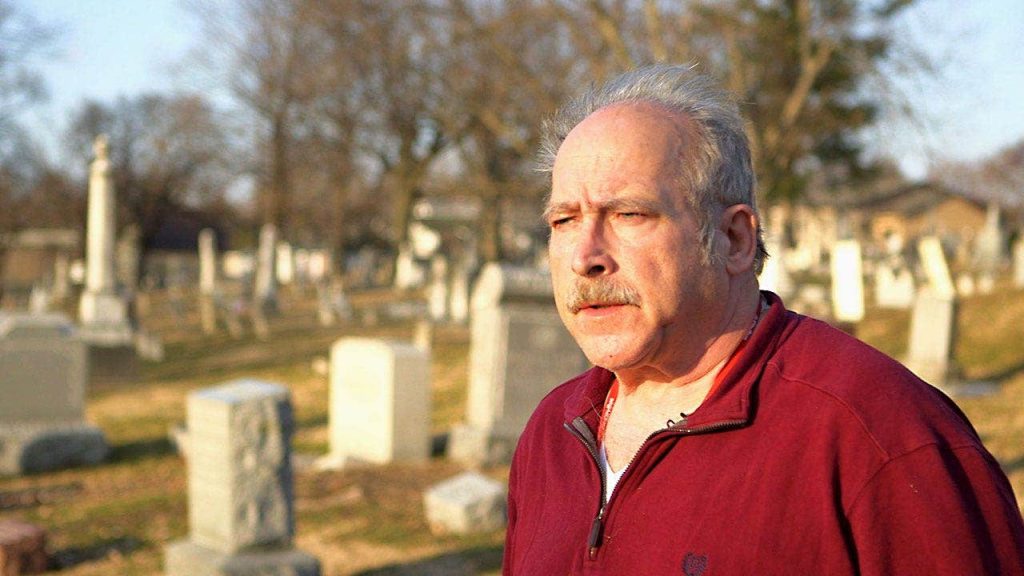
Powell, who is now in his late 70s, reportedly offered scattered memories from the mid-1980s and reacted to certain places with surprising local detail while failing to identify people. Shannon described a dreamlike hope that a dramatic reunion would occur, only to find Powell reluctant to be recognized and oddly comfortable avoiding personal contact. By late 2016 the filmmakers lost track of his location; they later concluded he might still be in the Lafayette area but had gone largely off the grid.
Maxwell said Powell’s apparent computer skills may have helped him disappear, noting a talent for remaining anonymous in a digital age. “If you have a purposeful plan to live underneath the radar, off the grid, you can do it,” he observed, adding that a lack of financial resources also makes long-distance movement less likely. For the Evangelistas, each new lead only deepened the mystery and strengthened their commitment to keep digging until the next piece of the puzzle turns up.