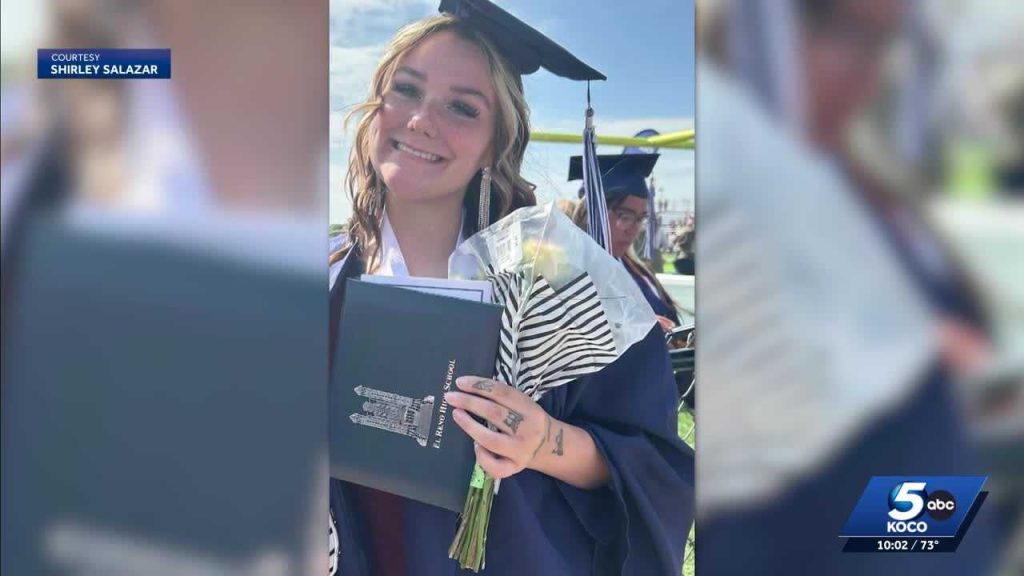
Shirley Salazar is speaking out after her 18-year-old daughter, Haleigh Salazar, was killed in a wrong-way crash in Canadian County that claimed four lives. Shirley’s reflections on Haleigh’s life and the sudden loss have opened a conversation in the community about safety and the ripple effects of a single wreck. The crash has left neighbors, friends and family searching for answers while trying to hold onto small memories that feel enormous now.
The immediate shock of losing someone so young is a hard thing to put into words, and Shirley has been frank about the emptiness that follows. She talks about mornings that now arrive with the strange silence of an absence you can’t fix. That silence is shared by classmates, co-workers and strangers who simply feel changed by a collision they did not cause.
Wrong-way crashes are rare but brutal, and when they happen they often involve multiple vehicles and catastrophic outcomes. The scene in Canadian County became a scene of scramble and sorrow, with first responders working to help and neighbors offering what support they could. For families like the Salazars the technical terms and crash reports do not capture how life rearranges itself after a single headline.
Shirley’s reflections have been less about blame and more about remembering who Haleigh was: a daughter, a friend, someone whose plans and potential were cut off far too soon. She insists that remembering specific everyday things matters — the laugh, the habits, the little rituals that made Haleigh unique. Those details are what keep a life from being reduced to a date and a cause of death.
Grief in public can feel especially raw, because there is always that tension between private mourning and community attention. People stop on porches to say a quick hello or leave a small condolence on a social feed, but those gestures don’t change the hours alone when the TV is on and it all sinks back in. Shirley has leaned on certain friends and family members, and she has also begun to talk about the need for something practical to come from this pain.
That practicality has two directions: one is how drivers and agencies can reduce these events, and the other is how communities can better support survivors and grieving families. Some people point to better signage, improved lighting or smarter road designs. Others note that once a crash happens, the human fallout requires counseling, funeral help and systems that do not leave families scrambling for basics.
The Salazar family’s focus on Haleigh’s memory also channels into small, tangible acts that neighbors can participate in. People have brought meals, organized rides and shared stories about Haleigh that capture tiny, vivid snapshots of who she was. Those snapshots are not meant to soothe every wound, but they do create a neighborhood ledger of kindness that the family can revisit when the hardest moments come.
On a broader level, wrong-way wrecks spark public conversation about prevention technology and enforcement. Courts, insurers and traffic planners will sort through the evidence and the legal steps in their own time. Meanwhile, families often ask local leaders for more immediate changes, and that local pressure can move budgets and policy faster than distant state debates.
Shirley has said that her grief is a long road, and that she plans to walk it with intention rather than letting it dictate every day. That intention looks like rituals of remembrance and practical lists of things to do for the family and for others who might face similar pain. Grief coaches and support groups have helped other families navigate this route, and those resources are often the difference between isolation and being held.
Children, siblings and close friends of victims like Haleigh experience secondary trauma that is easy to miss when reporting focuses on facts and investigations. Schools and workplaces in Canadian County have had to reckon with the emotional needs of students and staff affected by the crash. Counselors and community leaders can step in to offer structured support so people are not left to figure out heavy feelings alone.
There is also a legal and investigative timeline that follows a fatal crash, and that process can be slow and maddening for relatives who want answers. Police reports, toxicology results and insurance procedures move at their own pace, and families often confront bureaucratic hurdles while trying to plan funerals and memorials. Shirley has been candid about the exhaustion of juggling paperwork with the rawness of loss.
Community vigils and small memorials are common responses, and they give people a place to express grief with others who understand. Lighting candles, laying flowers, or simply speaking aloud about moments with Haleigh becomes a shared ritual that confirms no one holds their sorrow completely alone. For Shirley, those shared rituals are currently lifelines that anchor the days when grief threatens to wash everything away.
People close to the family say Haleigh’s life, though brief, left marks that will last, and the work of honoring those marks begins now. Friends plan to collect stories and memories so the glimpses of who she was do not fade into a single newspaper line. Shirley is focusing on keeping those recollections alive in everyday ways that her daughter would recognize.
As the weeks pass in Canadian County, the community will keep watching how authorities handle the crash and how families find footing afterward. For Shirley and everyone who loved Haleigh, the immediate world will be a patchwork of remembrance, practical support and the slow business of learning to live with absence. In the quiet hours, the family holds onto the small things that made Haleigh who she was and refuses to let her name be only a statistic.