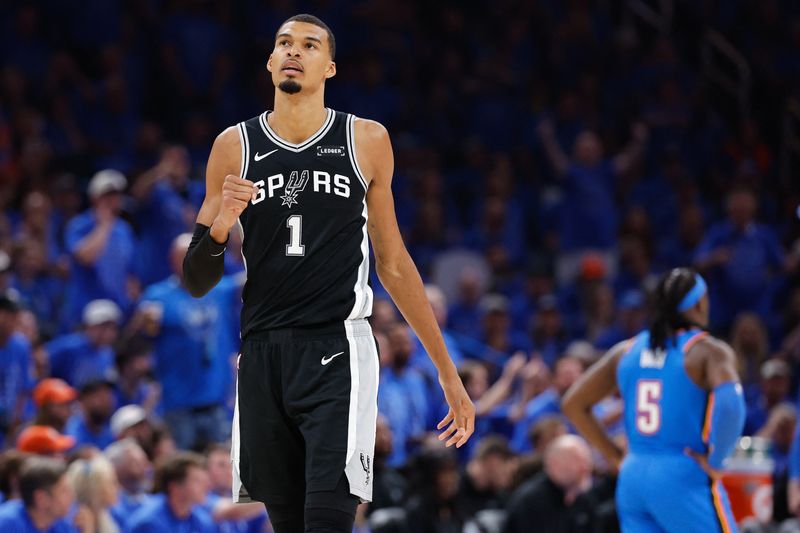
Victor Wembanyama of the San Antonio Spurs was the unanimous Defensive Player of the Year and the lone unanimous pick to the All-Defensive First Team, and the NBA’s defensive honors this season featured a mix of rising stars and established defenders from teams like the Oklahoma City Thunder, Detroit Pistons, Minnesota Timberwolves and Boston Celtics.
Wembanyama, just 22, has stamp-proofed his reputation as the league’s defensive anchor, finishing the season leading the NBA in blocks per game at 3.1 for a third straight year. That kind of rim protection changes how opponents attack San Antonio and forces a different kind of offense when he’s on the floor. His size and instincts have made him the clear face of defense across the league.
The All-Defensive First Team reads like a who’s who of big-time defenders: Victor Wembanyama is joined by Chet Holmgren of the Oklahoma City Thunder, Ausar Thompson of the Detroit Pistons, Rudy Gobert of the Minnesota Timberwolves and Derrick White of the Boston Celtics. Holmgren, who matched up with Wembanyama in the Western Conference finals, and Thompson stood out enough to finish close behind in the Defensive Player of the Year balloting. Those selections underscore a season where shot-blocking, length and versatile perimeter defense all mattered.
The vote totals show how competitive the defensive conversation was. Holmgren received 93 first-place votes and four second-place votes for a total of 190 points, while Thompson collected 72 first-place votes and 22 third-place votes to finish with 166 points. Gobert pulled in 61 first-place votes and 29 second-place votes for 151 points, and Derrick White rounded out the first team with 146 points, including 58 first-place votes and 30 second-place votes. Those numbers make it clear the voters were weighing impact, reputation and matchup value across different defensive roles.
The All-Defensive Second Team featured several players who deliver on consistency and matchup flexibility: Oklahoma City’s guard Cason Wallace, Toronto’s forward Scottie Barnes, New York’s OG Anunoby, Atlanta’s guard Dyson Daniels and Miami’s center Bam Adebayo. Each of those players brings a different defensive skill set, from perimeter lockdown ability and switchability to interior strength and communication. Together they represent the depth of quality defenders across the league.
Bam Adebayo also earned a distinct honor off the stat sheet, being named the NBA Social Justice Champion and receiving the Kareem Abdul-Jabbar Trophy, with the league pledging a $100,000 donation to the Bam, Books & Brotherhood Foundation. He delivered a measured acceptance that noted the broader purpose behind the award: “I accept this award not just for myself, but for every voice that has gone unheard and every person working behind the scenes to create a more just and compassionate world.” That recognition ties on-court leadership to civic engagement in a way that matters to teammates and communities.
A few other names were in the mix for that social justice recognition, including Boston’s Jaylen Brown, San Antonio’s Harrison Barnes, Cleveland’s Larry Nance Jr. and Detroit’s Tobias Harris. Their inclusion reflects the leaguewide emphasis on players using their platforms beyond basketball. Those finalists reinforced the fact that leadership now often comes with community work as a core responsibility.
These defensive awards will shape offseason conversations and roster plans heading into next year. Teams that leaned into defense this season—San Antonio, Oklahoma City, Detroit and Minnesota among them—have pieces that can alter playoff matchups and internal growth trajectories. Expect those names to dominate summer film sessions, free agent chatter and the early debates about who will set the tone defensively when the regular season kicks off again.