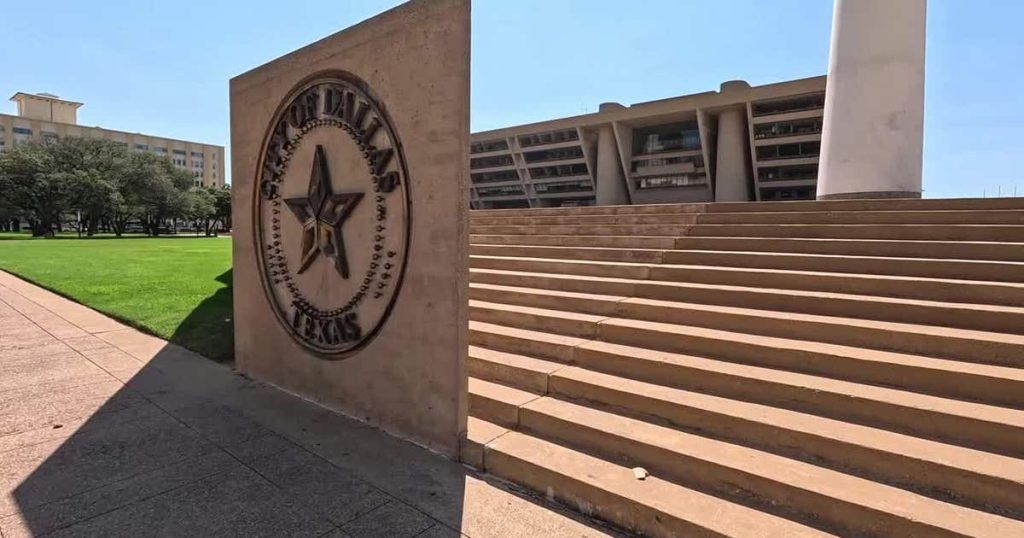
Panel members told the Dallas City Council that phased repairs, including asbestos abatement, can be done while staff stay in Dallas City Hall, a finding that challenges a previous 10-year, $1 billion plan. Don Powell of Fidelis and Dustin Yates of IMEG Corp spoke at the council meeting, offering examples and reassurance that work can be compartmentalized safely. The discussion also touched on competing proposals from the University of Texas at Arlington and the controversy around whether the Dallas Mavericks should build on the site. Community groups and dozens of speakers weighed in, setting the stage for a July decision on how to proceed.
The new expert panel argued the most expensive assumption in earlier plans was the need to relocate staff out of the building. That old plan carried a $1 billion price tag and a decade-long timeline, but the panel says those figures reflected a worst-case scenario rather than a practical path forward. If the city can keep employees in place during phased work, the upfront cost and disruption could drop dramatically. That practical, fiscally minded approach is the one many taxpayers want to see explored first.
Architects and planners told council members that asbestos abatement and major repairs can be handled sector by sector without shutting down the whole building. “It does not have to be done all at once. We can compartmentalize the building and do asbestos abatement,” said Don Powell, the executive vice president of Fidelis. “People say has this ever been done? Hospitals do it all the time. The barriers built to secure the hospital during abatement are very credible.” Those are not theoretical ideas—panelists pointed to real-world precedents as proof of concept.
Dustin Yates, a project executive with IMEG Corp, pointed to a recent Los Angeles County example where phased renovations were completed between meetings of the board. That kind of careful scheduling and staging keeps government running and avoids expensive temporary leases. For a city like Dallas, which is watching every dollar, the ability to avoid long-term displacement could be critical. Contractors and architects emphasized planning, phasing, and strong communications as the keys to making it work.
The council meeting attracted about 45 public speakers with sharply divided opinions on the fate of the building and surrounding land. Those in green shirts argued leaving City Hall and redeveloping the area would jump-start southern Downtown Dallas and open opportunities for private investment. Opponents worried that demolishing an iconic structure would erase civic history and that the site could be repurposed without tearing the building down, citing a University of Texas at Arlington proposal that claimed a Mavericks arena could be built nearby without demolition. One speaker even compared Dallas City Hall to the recent decision to paint over the Wyland mural of whales, saying once it’s gone, you can’t get it back.
City leaders are preparing to discuss options in closed session, including the possibility of leasing or buying temporary space if a move becomes necessary. The “Save Dallas City Hall” group has warned it will pursue litigation if the city moves toward selling or leasing the site to the Mavericks, so legal exposure is on the table. The architects’ panel has been asked to return with a more detailed phased plan and an updated cost estimate on June 3, which will be central to the next public debate. Council members stressed they want clearer numbers before committing to any irreversible course.
From a taxpayer point of view, the emphasis on phased repairs is a common-sense alternative to a sweeping billion-dollar rebuild. Dallas taxpayers should demand transparent bids, straightforward cost comparisons, and a proof-of-concept schedule that shows when work can happen without displacing employees. That approach respects the budget while protecting a downtown landmark and leaves open constructive competition for the 47 acres between the convention center and City Hall. Voters and business owners alike are watching to see whether the city will choose wasteful spending or pragmatic stewardship.
The coming weeks will matter: the panel must turn feedback into concrete estimates, opponents will push litigation threats, and council members will decide whether to prioritize cost savings or large-scale redevelopment. What happens in that closed session and on June 3 could reshape downtown Dallas for decades, either by preserving an emblematic building or by clearing space for a new arena and different skyline. The stakes are both fiscal and cultural, and the city will need clear, credible plans before it takes the next step.