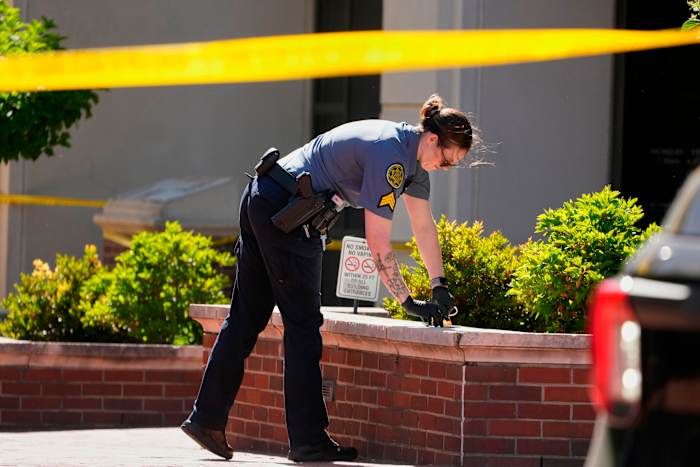
At a Tennessee courthouse, a white livestreamer now faces charges after a shooting that killed a Black man outside the steps, and experts say claiming free speech as a blanket defense won’t hold when an encounter turns violent. Legal analysts, prosecutors, and community voices in Tennessee are weighing how livestreaming, provocation, and public safety intersect when a camera is rolling. The case raises urgent questions about where protected speech ends and criminal action begins.
The charged livestreamer recorded scenes outside a courthouse, and those recordings are central to how the incident is being interpreted by authorities and the public. Attorneys note that context matters: a microphone and camera do not erase responsibility for actions that lead to another person’s death. In Tennessee criminal law, claims about what someone said or streamed will be measured against evidence of intent, threat, and physical conduct.
Experts interviewed by legal outlets stress that free speech rights have boundaries once confrontations escalate. Speech that incites imminent lawless action or is paired with aggressive behavior is not the sort of protected expression the First Amendment was designed to protect. When an unwanted interaction moves from words to force, courts look at what a reasonable person would have expected to happen next.
Livestreaming complicates things because it both documents and inflames. A live broadcast can serve as powerful evidence of what happened and how people behaved, but it can also amplify taunts or threats in real time, increasing the risk that tensions will boil over. Prosecutors often point to that amplification to show motive or conscious disregard for the safety of others.
Defenders of the streamer may argue that the footage shows an exercise of free expression or an attempt to expose perceived wrongdoing, and those claims will get their day in court. Still, criminal charges focus on conduct, and judges will separate expressive content from acts that cross into assault or homicide. The decision to press charges typically rests on whether prosecutors can prove beyond a reasonable doubt that the accused acted unlawfully, not merely offensively.
Race is inevitably part of the public conversation when the victim is Black and the accused is white, and community leaders in Tennessee are watching for transparency and fairness. Those dynamics don’t change the legal standards, but they do shape public trust in the criminal justice process. Officials who handle the investigation face the dual pressures of pursuing justice and calming a community that demands clarity.
Social platforms and live services are in the crosshairs as well, because they are where these confrontations are recorded and consumed. Companies can remove violent content or suspend accounts, but they are not a substitute for law enforcement or courts in deciding criminal liability. Policymakers and platform operators alike are being pushed to examine whether current rules and enforcement sufficiently deter dangerous behavior in public broadcasts.
From a Republican viewpoint, the priority is clear: protect free speech, but not at the expense of public safety and individual accountability. Law and order requires that people who allegedly cross the line into violence answer for their actions, regardless of the camera work they parade. Holding people accountable when threats or assaults occur is consistent with defending civil liberties that function only when citizens obey the law.
The Tennessee courthouse shooting and the livestream at its center will play out through evidence, witness testimony, and courtroom argument, and experts say the legal tests are well established. In the meantime, the case underscores a broader, urgent point: recording an incident does not make violence lawful, and public platforms amplify both the danger and the proof. The trial will test how courts weigh speech against conduct in a world where everyone can broadcast what happens on the street.