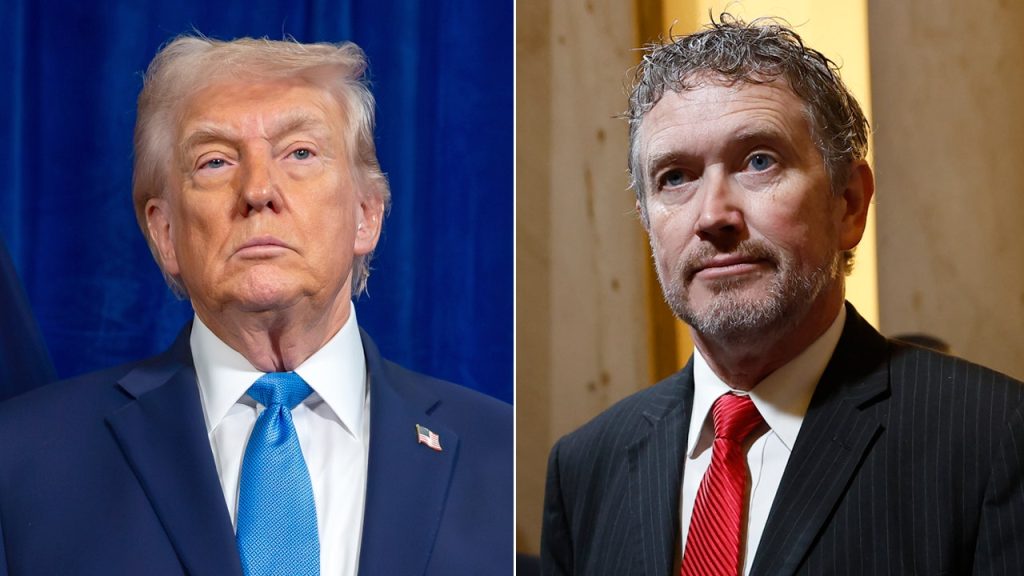
President Donald Trump claimed a big night as Tuesday’s primaries reshaped GOP lineups from Kentucky to Georgia and Alabama, with signature wins for Trump-aligned candidates and a high-profile loss for Rep. Thomas Massie in Kentucky’s 4th District. Voters there replaced Massie with former Navy SEAL Ed Gallrein amid record spending, while Trump-backed contenders like Andy Barr and Tommy Tuberville also scored important victories. Other states from Idaho to Oregon leaned the way Trump wanted, and competitive races in Pennsylvania and Georgia set up consequential fall matchups.
In Kentucky’s marquee contest, Ed Gallrein defeated Rep. Thomas Massie by a clear margin, flipping a seat long held by a vocal critic of the president. The race became the most expensive House primary in history, drawing support from pro-Israel organizations and pro-Trump groups that spent heavily to back Gallrein. The spending and organizational muscle made a difference, and voters chose a candidate who pledged to champion conservative families in Washington.
Massie’s tenure ended with him increasingly at odds with the party’s base and the broader conservative coalition, especially over trade, foreign policy and the handling of high-profile files. In a concession to supporters, Massie quipped, “I would have come out sooner, but I had to call my opponent to concede and it took a while to find him in Tel Aviv,” keeping his blunt style even in defeat. The message voters sent was clear: aligning with national priorities and strong alliances matters in the primaries.
President Trump and his allies took an active role in several key fights, deploying endorsements and media pressure against incumbents who broke with the president. That strategy paid off in multiple states, where Trump-supported candidates advanced or won outright, reinforcing his influence over the GOP bench. Campaigns that embraced Trump’s agenda emphasized border security, economic strength and backing allies overseas, and those themes resonated with primary voters.
In Kentucky’s Senate race, Rep. Andy Barr captured the GOP nomination to vie for the seat Mitch McConnell is leaving open, defeating former Attorney General Daniel Cameron decisively. Barr will face Democrat Charles Booker in the general election, setting up a pivotal contest for control and direction in the Senate. The result underscores how Trump’s backing can move contested statewide races and reshape the party’s slate.
Georgia produced its own drama as Secretary of State Brad Raffensperger failed to advance in the GOP gubernatorial primary, trailing Lt. Gov. Burt Jones and businessman Rick Jackson, who now head to a June runoff. Raffensperger drew Trump’s ire after contesting claims about the 2020 election, and his inability to secure a runoff spot shows the lingering cost of that split with conservative voters. Keisha Lance Bottoms claims the Democratic nod and will be the general election opponent, after securing a strong plurality in her primary.
Alabama voters moved Tommy Tuberville toward the governor’s mansion and advanced Trump-favored Rep. Barry Moore in the Senate primary, demonstrating continued appetite for candidates tied to conservative and Trump-era priorities. A tight race to replace Tuberville in the Senate saw former Navy SEAL Jared Hudson narrowly leading Alabama Secretary of State Steve Marshall with several thousand ballots left to count. Those contests highlight how the retirement or shifting ambitions of incumbents create high-stakes fights that attract national attention and resources.
Outside the Southeast, incumbents in Idaho like Gov. Brad Little and Sen. Jim Risch sailed through their primaries, and in Oregon, Rep. Clifford Bentz won comfortably with Trump’s backing. Meanwhile in Pennsylvania, Democrats backed by Gov. Josh Shapiro captured nominations in districts targeted for flipping this fall, landing victories for Bob Harvie, Bob Brooks and Janelle Stelson to set up high-stakes general election battles. The overall map shows a GOP energized by Trump’s influence in many places, while Democrats aim to capitalize on selective openings.