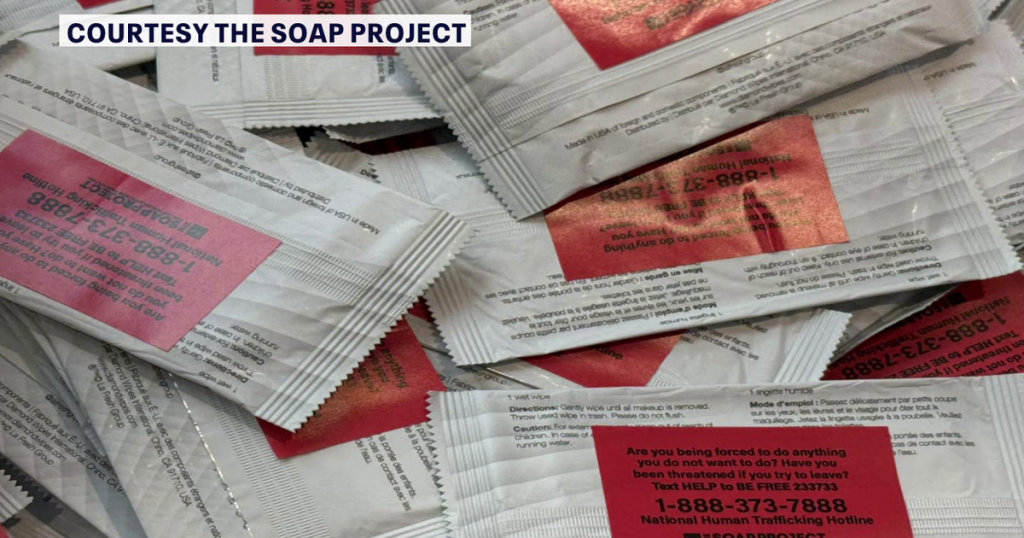
Volunteers from Selah Freedom and The SOAP Project fanned out across Clearwater, Florida, handing out bars of soap, makeup wipes and missing children posters at motels, hotels and diners along Gulf to Bay Boulevard. Misty Halsey, a law enforcement liaison and survivor, joined the outreach to put the National Human Trafficking Hotline directly into places victims might see it. The effort was aimed at communities around Clearwater and Sarasota and is part of a wider push in Pinellas County to give survivors a quiet lifeline.
Florida ranks third in the nation for human trafficking cases, a grim backdrop that drove the volunteers into storefronts and back rooms this week. Organizers from Selah Freedom, a Sarasota-based nonprofit, and The SOAP Project, which stands for Save Our Adolescents from Prostitution, focused on getting resources into the hands of hotel and diner staff who often encounter vulnerable people. The approach is simple but strategic: place help where victims may be alone and can see a discreet message.
Volunteers handed out hygiene bags and missing children posters while asking managers to display the posters in offices and break rooms so employees can spot a pattern and act. They also distributed bars of soap and makeup wipes printed with the National Human Trafficking Hotline number to increase the chance a victim sees contact information when they are alone. The teams concentrated along Gulf to Bay Boulevard because motels and roadside diners are common places traffickers use to hide activity.
“Our goal today is to bring out bars of soap and also makeup wipes that have the National Human Trafficking Hotline on it,” Misty Halsey, a law enforcement liaison and trainer for Selah Freedom, said. “Because we often know that the only time that a victim may be alone in one of these hotel rooms is in the bathroom.” That line captures why organizers prioritize items that travel into private spaces where victims might risk reaching out without their trafficker noticing.
Halsey, who has lived through exploitation, explained that victims often do not see themselves as such at first because of the psychological control traffickers exert. “They’re taught that it’s their choice. They’re manipulated, or at times, this is better than whatever it was that they ran from or came from,” Halsey said. “So, we’re out here to just let them know without law enforcement that there is help and support available to them and to share those resources.”
The outreach team also provided lists of missing children to staff, stressing that trained employees can be valuable eyes and ears when someone is trying to blend in. Selah Freedom pairs educational outreach with survivor housing, counseling and training for local personnel so those early warning signs turn into rapid, safe responses. These combined efforts try to remove the isolation traffickers rely on and give victims discrete, familiar pathways to safety.
Organizers said they run similar outreach several times a month across the region and have two more outreach days planned in Pinellas County this month to continue the momentum. The goal is not to confront traffickers directly in those roadside settings but to seed information and build relationships so staff know how to react if something doesn’t feel right. Regular visits also help nonprofits learn where trafficking patterns appear and how best to adapt materials and timing.
Community members, restaurant managers and motel staff were encouraged to accept the materials and keep an eye out for suspicious activity, while volunteers emphasized nonconfrontational reporting and support. The effort hinges on small acts—placing posters in break rooms, keeping a soap bar visible in the restroom, quietly sharing a number—that can create a path out for someone being exploited. Those tiny, practical steps form the backbone of an outreach strategy that relies on awareness, not force.
If you or someone you know needs help, the National Human Trafficking Hotline is available 24/7 at 1-888-373-7888, or by texting “HELP” or “INFO” to 233733.