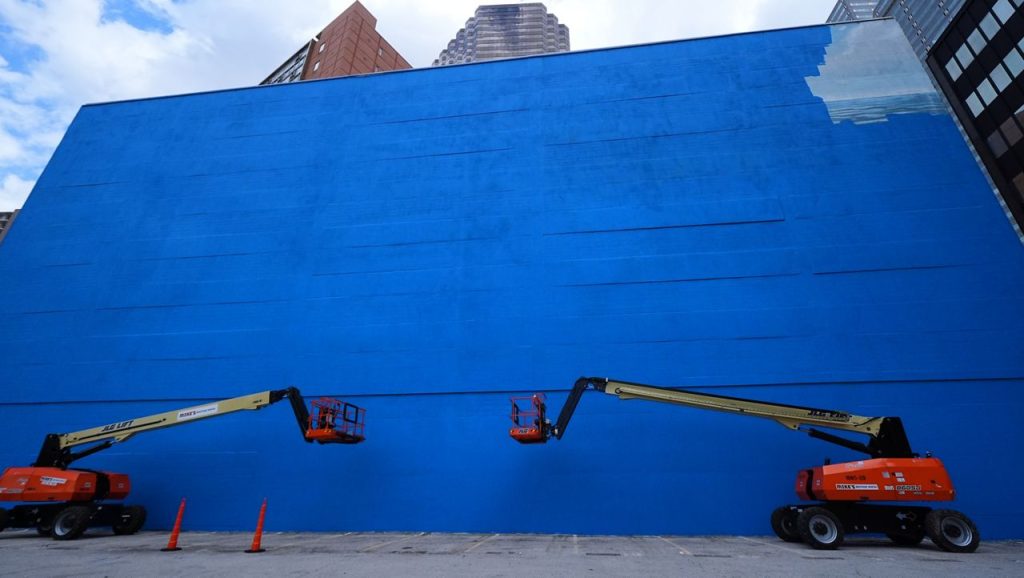
The mural, a towering depiction of whales that covered two entire walls of a downtown parking garage, had become a fixture for people passing through the area for decades. Known as “Whaling Wall 82,” it was dedicated in 1999 and stood as a recognizable piece of the streetscape for nearly three decades. For many, spotting those whales was part of daily life and a small landmark in downtown Dallas.
Work crews began painting over the image this month to install new artwork tied to the upcoming World Cup, and the change happened quickly enough to surprise locals. “I see that mural almost every day on my way to school and then one day they were painting it over,” Katy Rose Cusick said. Her reaction reflects how sudden the swap felt to people who passed the garage every day.
Wyland, the artist who created the whales, said he was “deeply disheartened” by the loss of the full mural. He also warned of broader implications: “When a piece that has carried meaning for generations can be erased without dialogue, it raises serious questions about how we value public art, artists, and the communities these works were created to serve.” Those words underline how the decision has become about more than just paint on concrete.
Two seniors at a local performing and visual arts high school, Cusick and Joshua Hurston, launched a petition on Change.org to raise awareness and try to halt the removal. The petition collected hundreds of signatures from residents who said they grew up spotting the whales and wanted the city to treat such works with more care. “If we couldn’t save necessarily the mural, making sure that something like this doesn’t happen again,” he said, expressing their hope to change policy going forward.
A spokesperson for the World Cup organizing committee said they were looking forward to “unveiling a new piece that captures this current historical moment and reflects the energy, unity, and global spirit surrounding the World Cup 2026,” and added that a “portion” of Wyland’s mural will be preserved “as a tribute to its lasting impact on the city.” That promise aims to bridge the push for large-scale event branding with some acknowledgment of the mural’s local meaning.
Downtown Dallas Inc. confirmed it was part of early discussions and said the mural was not part of the city’s public art collection before it introduced the organizing committee to the building’s owners. Slate Asset Management, which owns the garage, said it was approached earlier this year about donating the wall for a new public art installation by a local artist. The exchange between community groups, property owners, and event planners shows how public space can shift hands quickly around major events.
Dallas will play a major role in the 2026 tournament, hosting more matches than any other U.S. site, and nine matches are scheduled at AT&T Stadium in suburban Arlington. The retractable-roof venue will be called Dallas Stadium for the World Cup, a temporary renaming meant to emphasize the city’s central place in the tournament. The scale of preparations around those games helps explain why organizers sought prominent walls and other public canvases for event-related art.
Wyland has painted more than 100 Whaling Walls worldwide as part of his work promoting ocean conservation, and he framed the Dallas mural as part of a larger mission. “This was more than paint on a wall — it was part of my work, alongside the Wyland Foundation, to bring people together to protect our oceans and clean water,” he said. That sentiment is part of why the mural’s removal struck a chord with residents who felt it carried environmental and communal meaning.