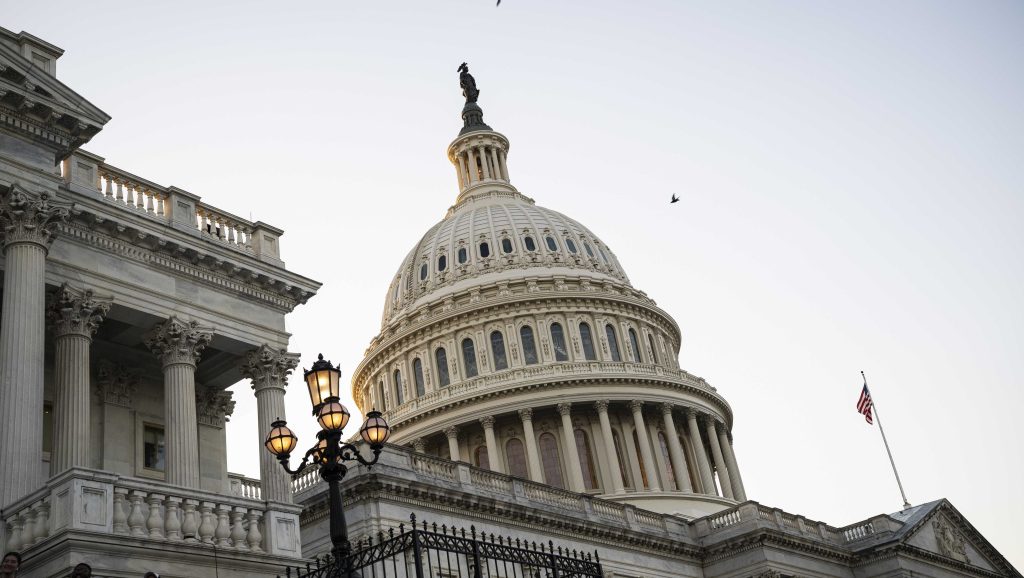
Washington in focus: the Senate moved a war powers measure this week that would push President Donald Trump to pull U.S. forces back from the Iran conflict, and Louisiana Sen. Bill Cassidy — fresh off a primary loss — broke with the president and voted for it. The tally and the debate on Capitol Hill show Republicans and Democrats wrestling over who has the authority to direct military action and how long a campaign can go on without clearer congressional backing. This article follows that vote, the reactions from GOP senators in Kentucky, Maine, Alaska and elsewhere, and the looming House action set for Wednesday.
The Senate approved a procedural step Tuesday on legislation intended to force a withdrawal unless Congress gives explicit authorization, finishing with a 50-47 roll call that surprised many on both sides. That count included a rare switch by Sen. Bill Cassidy, who had been aligned with the GOP conference until his recent primary defeat, and it left most of his conference uneasy about the direction of the campaign. Three Republican absences left the margin slim enough that their votes could have changed the result if they chose to stand with the president.
Republican Sens. Rand Paul of Kentucky, Susan Collins of Maine and Lisa Murkowski of Alaska joined the coalition pushing to reclaim war powers they say belong to Congress, and Sen. John Fetterman of Pennsylvania was the lone Democrat to oppose the motion. The vote signaled that some GOP senators want accountability and a clearer strategy before committing to a long-term military engagement. Cassidy framed his decision as a constitutional duty, not a personal rebuke.
Cassidy returned to the Hill after his loss and made clear he sees oversight as nonnegotiable, writing that “While I support the administration’s efforts to dismantle Iran’s nuclear program, the White House and Pentagon have left Congress in the dark on Operation Epic Fury.” He added, accurately reflecting the stance that drove his vote, “Until the administration provides clarity, no congressional authorization or extension can be justified.” Those lines undercut an argument many in the White House prefer: that the president needs flexibility to act swiftly.
Senate Democratic leader Chuck Schumer framed the move in blunt political terms, saying, “Republicans are starting to crack, and momentum is building to check him,” and adding, “We are not letting up.” Democrats have used floor votes repeatedly since the conflict began at the end of February to press the administration for a congressional role. The message from the minority is that Congress will assert its constitutional responsibility, even against a Republican president.
On the other side, several Republicans voiced concern about the long-term plan and the administration’s communication with Capitol Hill while still expressing support for the initial decision to use force. Sen. Mike Rounds of South Dakota told colleagues that the War Powers Resolution offers a place to have the debate, but he also said he prefers to stand with the president for now. That balancing act explains why the outcome remains uncertain even as pressure builds for answers on strategy and endgame.
The House is set to take up a similar war powers resolution on Wednesday, and Democrats expressed optimism about its chances after a razor-thin tie on a prior House attempt. Even if both chambers send a withdrawal directive to the president, the constitutional and political obstacles remain: the White House can claim a narrow reading of “hostilities” under the 1973 law, and a presidential veto could block congressional pressure unless two-thirds majorities materialize. That reality keeps this fight more about signaling and oversight than an immediate guarantee of troop movements.
President Trump has kept Congress notified in writing as the War Powers Resolution requires, filing a notice within the statutory window, but lawmakers say written notice is not the same as a full strategic briefing. Critics worry the fight will drag on while the ceasefire on the ground stays fragile and prices at the pump keep climbing, an economic pain point Democrats highlight. In a Senate floor exchange, Sen. Chris Murphy said, “Peace negotiations are stuck and so day after day after day grocery prices climb, gas prices climb,” underscoring the domestic pressure tied to foreign policy choices.
Republican leaders are watching political consequences too. Trump’s endorsement choices in Republican primaries, including his move on Texas Sen. John Cornyn’s opponent, and Cassidy’s primary loss have injected anxiety into the conference about how much control the president wields. That unease may nudge more senators toward demanding briefings and public hearings before signing on to open-ended military commitments.
Earlier this year, a similar tactic produced results when GOP senators forced a public airing on Venezuela and won commitments to explain the administration strategy, and that episode is now a template for how Congress could press on Iran. Senators Todd Young of Indiana and Josh Hawley of Missouri switched positions in that case after Secretary of State Marco Rubio agreed to a hearing, showing that leverage can work. Lawmakers hope the same dynamics will bring clarity on Operation Epic Fury.
Practically speaking, even successful floor votes serve to spotlight the debate more than to produce instantaneous change, because overriding a veto requires a much larger congressional majority. Still, for many senators the votes are a necessary curb on executive power and a way to force a national conversation about objectives and boundaries. The back-and-forth in Washington now is less about whether action was taken and more about how a democratic system keeps the people and their representatives informed.
Mary Clare Jalonick contributed to this report.