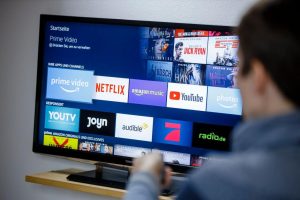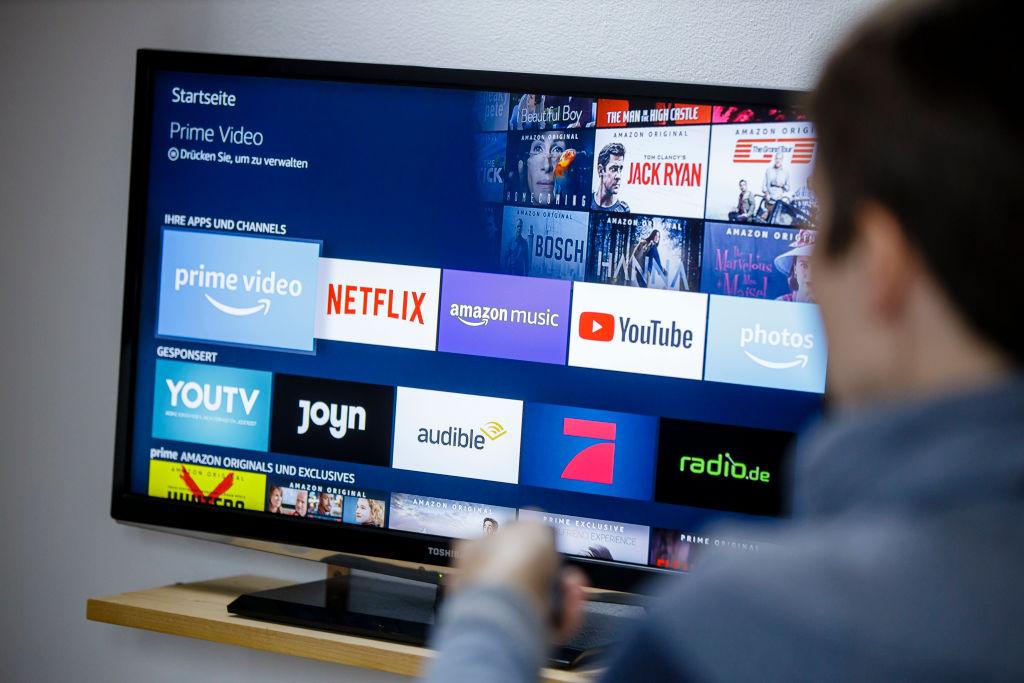
Omdia warns that connected TV advertising is getting crowded: by 2030 it expects global CTV ad revenue to reach $81 billion, and that Amazon, Netflix and Google will together control roughly half of that market. The projection reshapes how advertisers, broadcasters and vendors in places from Berlin to New York will budget for streaming slots, and it touches companies and services familiar to the industry like NEP Group, Fox Sports, Media Links and the NFL.
Advertisers are already moving dollars toward screens that behave like television but deliver digital-level targeting, and that shift is the engine behind Omdia’s $81 billion forecast. The big platforms—Amazon, Netflix and Google—bring scale, deep user data and ad systems that make it easy to spend, which explains why analysts expect them to take a dominant share. That concentration will force brands to negotiate on the platforms’ terms, rather than the other way around.
For legacy broadcasters and agile ad tech firms, the rise of these handful of players is both a threat and an opportunity. Companies such as NEP Group that power live production could find demand for better-integrated streaming services, while vendors like Media Links will be pressed to demonstrate how their gear and workflows support multiplatform delivery. Still, competition will favor whoever can tie measurement, creative and delivery into a single, accountable package.
From a creative standpoint, the CTV environment rewards longer, higher-quality formats and context-aware ad experiences more than the short bumper ads of mobile. That plays into Netflix’s content-first approach and Amazon’s commerce-driven targeting, while Google leverages its search and YouTube reach to round out advertiser offerings. Advertisers that crack the code on storytelling plus measurable outcomes will see better returns as the market scales.
Sports is a key battleground, and recent industry moves underline why. Fox Sports’ experiments with cinematic in-car camera work and rights holders’ tests of streaming-first windows signal that sports audiences are ready to follow games off traditional cable. At the same time, the NFL’s public pushback against streaming-only shifts shows leagues still expect a careful negotiation of rights, distribution and revenue models. Those tensions matter because live sports remain one of the few categories that reliably draws mass, appointment viewing on CTV.
Ad tech and measurement will need to evolve fast to keep pace with the concentration Omdia predicts. Programmatic buyers want transparency on audience reach and frequency across devices, and publishers need clearer ways to value inventory when the same user can be reached on multiple screens. Expect a wave of deals and product launches as measurement firms chase parity with linear TV metrics while offering the richer targeting advertisers crave.
Privacy policy and regulatory pressure will also shape how ad dollars flow into CTV. With tighter rules on cookies and increasing scrutiny of data use, Amazon, Netflix and Google will push first-party solutions that keep advertising effective but less dependent on third-party identifiers. That will advantage platforms with large, logged-in user bases and challenge smaller publishers to prove their value without leaning on invasive tracking.
For marketers, the practical takeaway is simple: allocate thoughtfully and test boldly. Put spend where you can measure outcomes, but keep runway for emerging formats and partner relationships outside the biggest walled gardens. If Omdia is right, winning in CTV will require a mix of strategic media buys, creative that respects the lean-back viewer, and technical partnerships that bridge programmatic reach with reliable measurement.