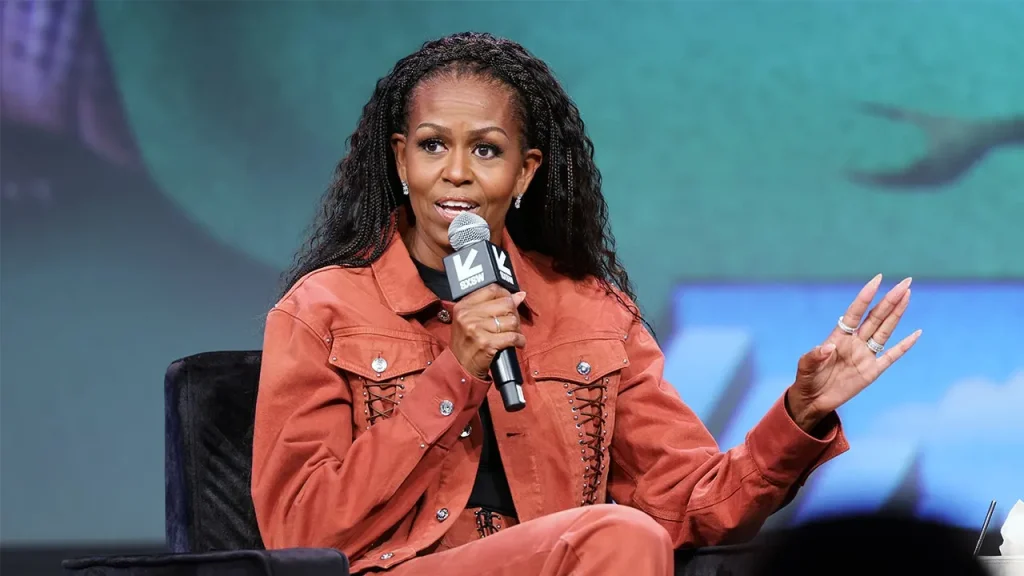
Michelle Obama told Sam Fragoso on the “Talk Easy” podcast that many Trump voters acted from pain and desperation, not cruelty, and she argued the country is in a messy “janky” phase while communities like those in Minnesota respond to crises.
On air, Michelle Obama pushed back against the idea of simply writing off former President Donald Trump’s voters as uncaring or hateful, arguing their choices often come from feeling squeezed by rising costs and broken systems. She said disappointment over election outcomes is understandable, and she framed support for Trump as rooted in people’s immediate struggles with healthcare and the cost of living. That line of thinking aims to humanize a portion of the electorate most politicians find frustrating to reach.
Sam Fragoso asked whether her view of the country changed after Trump won in 2016 and again in 2024, and Obama answered with a mix of disappointment and empathy. She insisted that anger is understandable when people feel left behind and that voters may latch onto a figure promising relief. Republicans hear that and see a reminder that solving real problems — not moralizing — wins votes.
Michelle Obama said, “And that’s true that anger, you know, I can’t look some people in the face and tell them you have no right to be angry or to do something that maybe is against your own interest,” and she stressed the human side of political decisions. She added, “So, you can’t just pigeonhole them and say you just don’t care, and you’re racist or whatever you’re thinking. This is an act of ‘I don’t know what else to do.'” Those exact lines underline her plea for restraint from elites who prefer to scold rather than fix.
She urged leaders to focus on the middle class and working people who are “drowning in this economy.” “I just wish we had more leaders that were figuring out how to do more for the middle class, for the working folks, because those are the folks who are drowning in this economy,” Obama said, pointing to economic strain as a political fault line. That’s a point Republicans often make bluntly: voters care about pocketbook issues first and cultural arguments second.
Obama described the nation as moving through different versions of itself, calling the current period “janky” and a kind of 2.0 phase. “Well, that’s the 2.0 of life and when we talk about, how do you feel about the country? You know, there are versions of the country that happen, right? And the new version doesn’t make the old one bad. It’s necessary for growth. And I think we’re in just a janky version,” she said, using plain language to explain messy political transitions. From a conservative point of view, messy transitions also demand practical changes, not more lectures.
She argued public reaction in places like Minnesota mattered, pointing to community responses after local ICE shootings as evidence that people still mobilize to protect one another. “But with each, you know, with each version, we learned something about ourselves as a country,” Obama said, later noting, “I mean, Minnesota, powerful stuff. I mean it was a powerful reminder of what a community of people can do and are willing to do to protect one another.” That praise for local civic action sits comfortably with those who favor community solutions over broad, one-size-fits-all mandates.
Republicans will nod at her emphasis on leadership that actually helps middle-class families, even if they disagree with her politics. The blunt truth from conservative voters is that government has to deliver better results on costs, healthcare access, and security, and voters will reward leaders who prioritize those problems. When high-profile figures point to pain as the driver of politics, it confirms what many on the right have argued: policy wins votes more reliably than lectures.
Obama’s plea not to belittle voters who chose Trump reads like a warning to her own side: alienation is dangerous and ineffective. If Democrats respond by doubling down on moral condemnation, they risk further erosion among the very voters Obama says are simply trying to survive. That dynamic plays into Republican messaging that says accountability and tangible improvement beat virtue signaling.
The conversation with Fragoso landed on a familiar refrain: Americans want leaders who solve everyday problems, not performative gestures. Obama’s observations about anger, confusion and the search for alternatives are a reminder that political winners will be those who offer clear, practical paths out of economic strain. The debate now is whether either party will actually deliver what families need instead of trading moral high ground for votes.