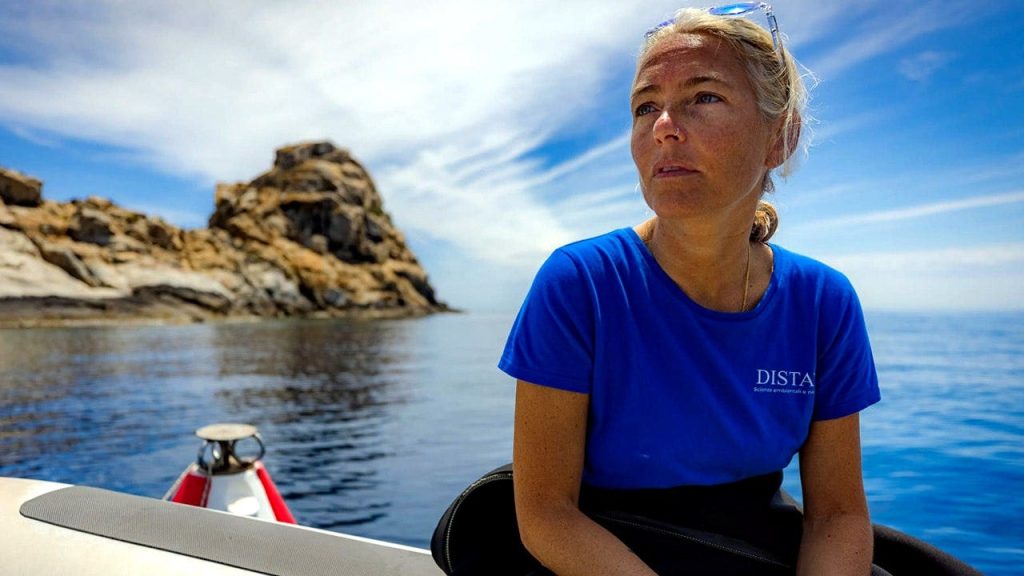
The tragic deaths of five Italian divers off the Maldives, including University of Genoa ecology professor Monica Montefalcone and her daughter Giorgia Sommacal, have left families demanding answers and officials scrambling for explanations. The victims also included marine biologist Federico Gualtieri, researcher Muriel Oddenino, and diving instructor Gianluca Benedetti, and authorities say bodies may be trapped deep inside a cave system near Vaavu Atoll. Relatives and specialists are pointing to possible equipment or breathing-mix failures while rescue teams and foreign experts weigh how to proceed safely.
Relatives of the dead have been vocal and distraught, especially Carlo Sommacal, who spoke to Italian outlets after the loss of his wife and daughter. He insisted his wife “would never have put the life of our daughter or other kids at risk.” He also told reporters, “My only certainty is that my wife is one of the best scuba divers on the face of the earth,” and added separately, “Something must have happened.”
The group was a mix of experienced divers and researchers traveling to study underwater environments when the tragedy struck. Authorities identified the victims as Monica Montefalcone, Giorgia Sommacal, Federico Gualtieri, Muriel Oddenino, and Gianluca Benedetti. Those names have become the focus of both grief and questions about what went wrong on a dive described as routine by some who knew the team.
Rescue efforts turned grim early on when Gianluca Benedetti was found dead close to the cave entrance shortly after the group vanished. Officials now believe the other four bodies are trapped well inside a submerged cave system roughly 160 feet under the surface near Vaavu Atoll. That depth and the cave’s layout present obvious barriers to a fast recovery, and teams have been forced to balance urgency with safety.
The precise cause of the deaths remains under investigation, and local authorities called the episode the Maldives’ worst single diving accident. A perilous recovery mission had to be paused after another diver, a member of a rescue mission, died while searching the system. With decompression risks and confined spaces, teams have been cautious about sending more people into the caverns without specialist support.
An Italian pulmonologist who spoke to local media said the pattern of deaths “suggests a problem with the tanks.” That assessment has shifted part of the spotlight onto equipment checks and the composition of the breathing mix each diver used. Experts are stressing that when several people on the same dive die, the timeline and gear need to be examined closely by independent specialists.
Claudio Micheletto, director of pulmonology at the University Hospital of Verona, suggested the incident points less to depth and more to what the divers inhaled, saying it was “not so much a depth problem, but rather [an issue with] what they breathed.” He added, “It is likely that something did not work in the tanks.” He also warned, “The people using them could not have noticed: Checks are the responsibility of those who produce and manage the equipment.”
Alfonso Bolognini, president of the Italian Society of Underwater and Hyperbaric Medicine, listed several possible causes, including “an inadequate breathing mixture that can create a hyperoxic crisis,” and raised the possibility that panic may have worsened the situation. He noted that “Inside a cave at 50 meters deep, all it takes is a problem for one operator or a panic attack for one diver.” In his view, “In these cases, the panic component could lead to even fatal mistakes.”
After the loss of the military diver during the search, operations were put on hold and rescue teams limited their exploration to two of the cave’s three large chambers to avoid further decompression hazards. The Italian Foreign Ministry described the cave system as three big chambers linked by narrow passages, which has complicated any recovery attempt. Officials are now waiting for three Finnish cave-diving specialists to arrive and reassess the mission before attempting any deeper entry into the system.