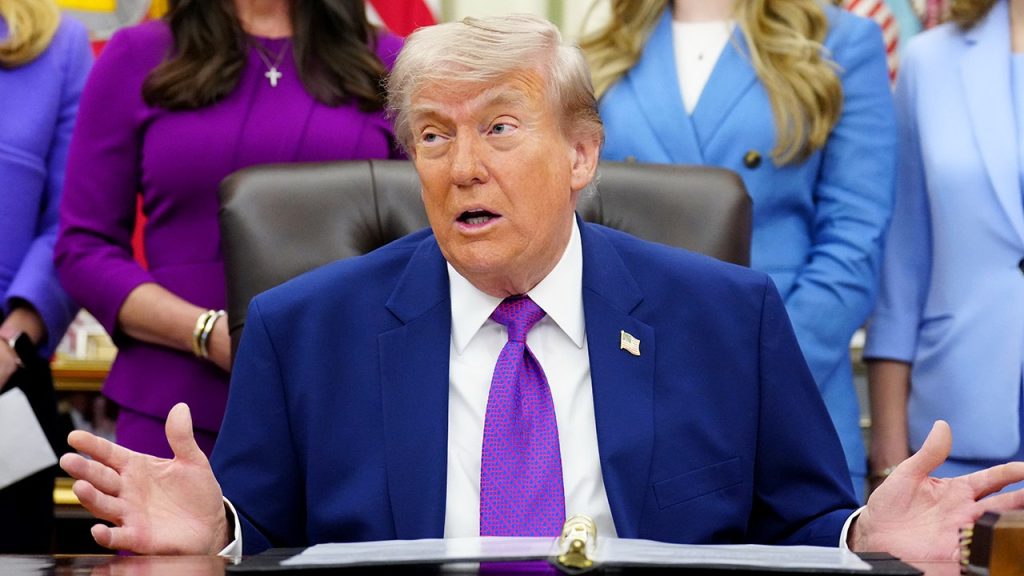
President Donald Trump sharply renewed warnings to Iran after a call with Israeli Prime Minister Benjamin Netanyahu and his recent face-to-face meeting with China’s Xi Jinping. The discussion comes as U.S. officials and regional partners weigh whether to restart military pressure over Iran’s nuclear ambitions and disruptions around the Strait of Hormuz. Signals of economic strain inside Iran and intelligence assessments of Tehran’s maneuvers are ratcheting up the stakes for Washington and its allies.
Trump left a blunt message on social media, writing: “For Iran, the Clock is Ticking, and they better get moving, FAST, or there won’t be anything left of them,” and followed it with “TIME IS OF THE ESSENCE!” That tone makes clear the administration is not playing coy about consequences. The language also signals a readiness to push for decisive outcomes rather than prolonged bargaining.
Netanyahu spoke publicly about the same concern, saying, “Our eyes are also open regarding Iran,” and adding, “I will speak today, as I do every few days, with our friend President Trump. I will certainly hear impressions from his trip to China, and perhaps other matters as well. There are certainly many possibilities, and we are prepared for every scenario.” Those words underline a tight dialogue between Jerusalem and Washington as regional tensions rise.
Trump remained at the White House with no public events on the schedule while officials digested regional intelligence that Tehran may be testing the limit of U.S. patience. Behind the scenes, planners are debating whether military options should be revived to blunt Iran’s nuclear drive and to punish tactics that threaten commercial shipping. For Republicans and allies who distrust diplomatic delay, military pressure looks like a credible lever to force concrete Iranian concessions.
Regional intelligence assessments suggest Iran is buying time in hopes of complicating any return to strikes, and analysts describe Tehran’s approach as a strategy of ‘deception and delay’ with the aim of outwaiting international resolve. The calculation inside Tehran appears to be that dragging out the crisis could make it politically and operationally harder for the United States to mount a prompt response. U.S. planners are watching carefully for signs that any stall is tactical rather than sincere.
Those assessments include a belief that Iran thinks it can stretch the crisis for at least two weeks, long enough to change the political arithmetic. Iranian strategists reportedly are counting on global distractions — high-profile sporting events and major anniversaries — to blunt international attention. That kind of timing could give Tehran breathing room to advance its programs while public focus shifts elsewhere.
Visible strain is already showing inside Iran, according to Israeli and regional sources, as U.S.-led measures tighten pressure. Early signs of a developing fuel crunch surfaced over the weekend with long lines at gas stations and rising public anger over shortages and distribution failures. Prices are climbing, unemployment pressures are growing, and inflation appears to be accelerating, all of which feeds domestic unrest and limits Tehran’s maneuvering room.
“It’s getting exponentially worse,” the official added, painting a picture of mounting economic stress that could either destabilize the regime or harden its resistance, depending on how leadership reacts. Those dynamics complicate choices for Washington: tighter pressure risks civilian pain and the unforeseen consequences of domestic upheaval, while hesitation risks rewarding Tehran’s delaying tactics. Republican policymakers are arguing that firm, timely pressure is the safer path to prevent a nuclear threshold.
For now, military planners and diplomats are lining up scenarios with Netanyahu and other partners, weighing timing, targets, and international fallout. The administration’s public posture — tough language, close consultations, and visible readiness — is intended to squeeze Iranian options while keeping allies coordinated. America’s approach will test whether deterrence and pressure can force meaningful Iranian concessions without sliding into a broader conflict.