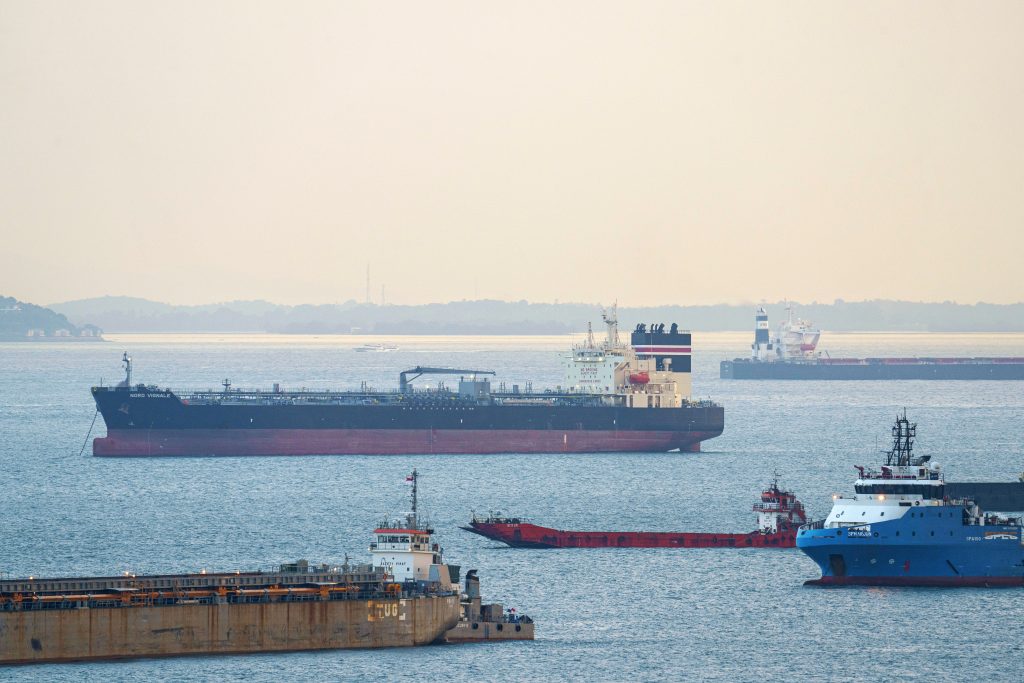
The Strait of Malacca, watched closely by Singapore, Indonesia and Malaysia, is suddenly front and center in debates about global trade and military strategy after unrest in the Strait of Hormuz. Singapore’s Foreign Affairs Minister Vivian Balakrishnan and figures like retired Australian naval captain Sean Andrews and University of Copenhagen professor Christian Bueger have all warned that lessons from Hormuz could apply here. The piece looks at the geography, the strategic stakes for the United States and its allies, and the diplomatic and military responses shaping the region. It also flags China’s long-running effort to escape what former Chinese President Hu Jintao called the “Malacca dilemma.”
The Malacca corridor is narrow, vital and crowding with commerce; it links the Indian Ocean to the Pacific and carries a huge share of Asian trade and energy shipments. That geography makes it a strategic choke point in any great power tension, and it’s exactly why Washington has kept a steady naval presence in the region through the 7th Fleet for decades. The U.S. posture has been about deterrence and keeping sea lines open for allies like South Korea, Japan and the Philippines.
Singapore’s Balakrishnan put it starkly: “If they go to war in the Pacific, what you are witnessing now in the Strait of Hormuz is just a dry run,” and that warning has resonated across capitals. China’s navy has modernized fast and now claims regional influence, and those moves underline why American partners are anxious about future scenarios. From a Republican perspective, that modernization is a reminder to keep U.S. forces strong and forward deployed so deterrence remains credible.
Retired Australian naval captain Sean Andrews framed a blunt operational option: “If I was the admiral, I would shut down Malacca,” suggesting a gatekeeping role in crisis. He added that “Certain ships would be allowed to go through, and certain ships wouldn’t be allowed to go through,” which captures how control of the strait could become a tool in a larger conflict. Any formal or informal closure would force costly reroutes through the Lombok Strait or around the Indonesian archipelago, raising insurance costs and disrupting schedules for global shippers.
Still, Malacca is not Hormuz in every respect. Where Hormuz leaves some Gulf states effectively boxed in, Malacca offers alternate but longer routes, meaning a shutdown is more of an economic drag than an absolute barrier. That reality matters for strategy: blocking Malacca would hurt global trade and send shockwaves, but it might not fully sever Asia’s maritime lifelines. Policymakers must weigh those differences while planning force posture and alliance coordination.
China’s answer to vulnerability has been multi-pronged, driven by the so-called “Malacca dilemma” that Hu Jintao named years ago. Beijing has pushed pipelines, overland routes and port investments to diversify energy flows and blunt reliance on chokepoints. For U.S. allies and for American strategic planners, the lesson is clear: economic links and security guarantees need to be thick and resilient, not brittle and hope-driven.
Security thinkers like Christian Bueger warn the old model of big gunboats alone isn’t enough. “Freedom of navigation cannot be ensured anymore with big gunboats,” he said, making the point that maritime security increasingly requires cooperation, intelligence sharing and legal frameworks alongside naval power. That dovetails with recent U.S. moves: Defense Secretary Pete Hegseth announced a defense cooperation partnership with Indonesia, stressing “commitment to cooperation based on mutual respect, sovereignty, and shared interest in regional peace and stability.”
Regional diplomacy is tightrope work. Indonesia briefly flirted with a “toll booth” idea through Finance Minister Purbaya Yudhi Sadewa before backing away, and Malaysia’s Mohamad Hasan insists any changes to Malacca must involve all neighbors. Singapore stands as a coordinator in the effort to keep the strait open and predictable, and Barbora Valockova of the National University of Singapore urged that “maybe the lesson from Hormuz is that it shows that we should even redouble our efforts to keep Malacca open, predictable and insulated as far as possible from wider geopolitical confrontation.”
Singapore makes the legal case too, insisting the neighborhood will abide by the U.N. Convention on the Law of the Sea. “With respect to both America and China, we have told both of them, we operate on the basis of UNCLOS,” Balakrishnan said, and he stressed that “The right of transit passage is guaranteed for everyone. We will not participate in any attempts to close or interdict or to impose tolls in our neighborhood.” Those are firm lines that should guide U.S. policy and alliance planning moving forward.