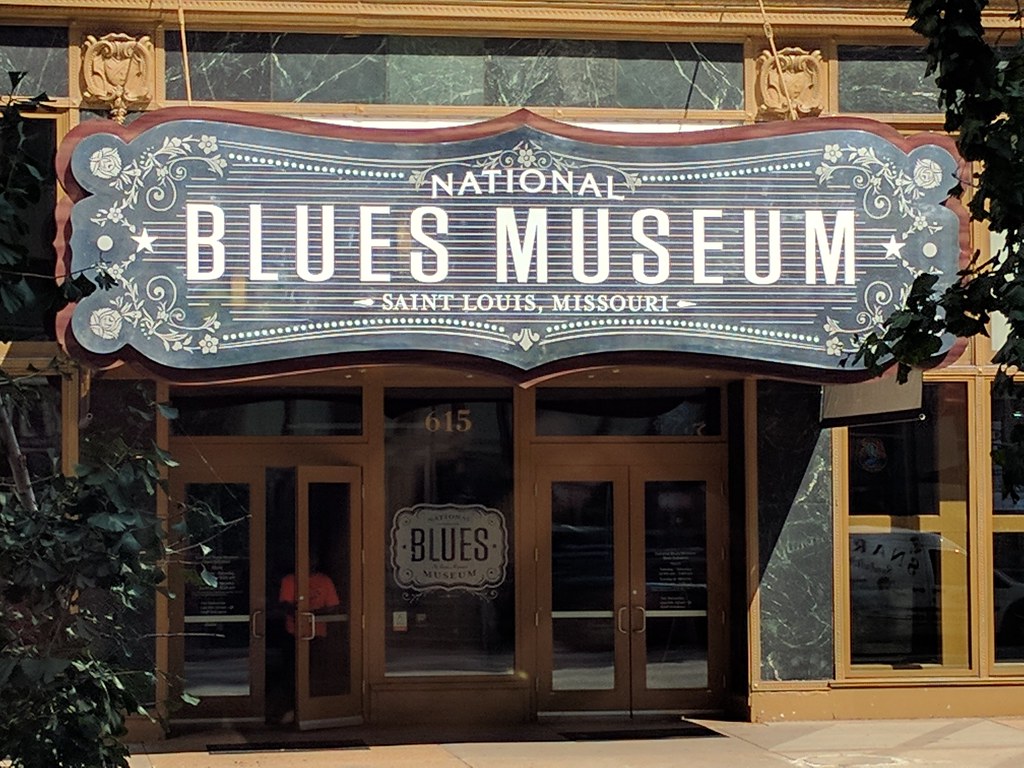
There is a moment, somewhere between the interactive listening stations and the floor-to-ceiling timeline of American music history, when it hits you: everything you love about rock and roll, soul, R&B, and jazz quietly owes a debt to the Blues. That realization lands differently when you are standing inside the National Blues Museum in downtown St. Louis, surrounded by the evidence.
Opened in 2016 and tucked into a beautifully restored building at 615 Washington Avenue in the heart of the Washington Avenue Loft District, the National Blues Museum is one of those places that earns genuine superlatives. It is the only museum in the country dedicated exclusively to the history and ongoing legacy of Blues music, and St. Louis — a city that served as a critical crossroads for musicians traveling between the Delta and Chicago — turns out to be exactly the right home for it.
Plan to spend at least two hours here, though most visitors end up staying longer. The permanent collection traces the Blues from its roots in West African musical traditions and the hardships of the American South all the way through its electric transformation and its profound influence on modern music. The exhibits are immersive rather than static. You can sit down at a digital piano station and experiment with the pentatonic scales that form the backbone of Blues composition. You can pull on a pair of headphones and lose yourself in recordings spanning more than a century, from early acoustic field recordings to electric Chicago Blues to the St. Louis sound that artists like Chuck Berry helped define.
Speaking of Chuck Berry — the museum gives his St. Louis story the weight it deserves. The city’s complicated, proud relationship with Berry is handled with nuance, and the exhibit contextualized within the broader sweep of the Blues tradition makes it feel less like a greatest-hits display and more like genuine cultural history.
The rotating exhibits are worth checking before you visit. Past featured shows have spotlighted Blues women, regional styles from the Piedmont to Texas, and the visual art that the Blues has inspired. The museum keeps things fresh, which gives locals a real reason to return.
On select nights and weekends, live performances take place inside the museum’s intimate venue space, the Luminary. There is nothing quite like hearing a guitarist bend a string in a room built specifically to honor that sound. Check the calendar before you go — catching a live set here elevates the whole visit into something close to a pilgrimage.
Admission is reasonable, parking in the surrounding loft district is manageable on weekends, and the museum sits within easy walking distance of several excellent restaurants and bars along Washington Avenue. Come hungry for history, and leave with a playlist that will follow you home.