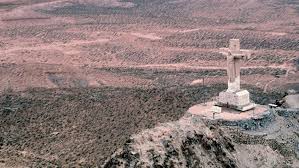
EL PASO, Texas (KVIA) — This week brought a big shift in how border security is being handled across our region, centered on a federal lawsuit and a fight over land near the U.S.-Mexico line. The Department of Justice filed suit against the Catholic Diocese of Las Cruces on behalf of the Department of Homeland Security, and local leaders from El Paso to southern New Mexico are already parsing what it means for property rights, law enforcement and community safety.
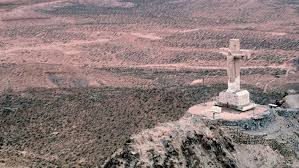
The headline is simple: the federal government wants more direct control over a strip of land that sits where migrants and smugglers often try to cross. For Republicans who prioritize secure borders, that goal sounds sensible on the surface. But the way the federal government is moving forward — through litigation against a local religious institution — raises deeper concerns about overreach and how decisions are made on the ground.
First, there’s the question of precedent. Suing a diocese to obtain land use or access sets a procedural example that could be applied in other border communities. That matters in places like El Paso and Las Cruces because land ownership and local stewardship have historically been handled through a patchwork of private, tribal, municipal and church holdings. Letting the Justice Department short-circuit negotiation by going straight to court changes the balance of power.
Second, local officials and residents worry about transparency and consultation. Border issues are messy and emotional; they require clear communication between federal agencies and the people who live with the consequences every day. Republicans in the region will argue that security measures work best when locals are part of the plan, not surprised by a court filing that rearranges facts on the ground.
Third, there’s the practical side: gaining control of land is not the same as solving smuggling, trafficking and illegal crossings. Border enforcement needs boots, tech and predictable rules of engagement. From a Republican perspective, judges and lawsuits are poor substitutes for coherent policy that pairs manpower and technology with strict enforcement of immigration laws.
Fourth, the move has implications for property rights and religious liberty. The Catholic Diocese of Las Cruces, like any property holder, expects due process and fair negotiation. When the federal government uses the courts to press its agenda, it risks alienating local partners and inflaming public reaction. That is exactly the opposite of what you want in a border region where cooperation between agencies, landowners and faith groups can be a force multiplier.
Look at the political signaling here: the Department of Justice acting on behalf of the Department of Homeland Security sends a message that the federal executive branch will use every tool at its disposal to secure the border. Voters in Texas and New Mexico who want strong enforcement will welcome decisive action, but they will also demand respect for local institutions and the rule of law. Republicans will push for strategies that secure borders without trampling civil liberties or local control.
Finally, there’s a strategic lesson for lawmakers. Congress must stop passing the buck. If federal agencies need authority and funding to manage land and secure borders, those powers should be spelled out clearly and debated openly in Capitol Hill committees. Litigation should not become the backdoor way to change policy. Republicans will press for legislative fixes that provide resources and clear authority, rather than letting courts rewrite the map piecemeal.
El Paso and Las Cruces are at the center of a fight that is both practical and symbolic. How this lawsuit plays out could influence federal approaches from California to Texas to Arizona. The conservative view here is straightforward: defend the border, yes, but respect property rights, preserve local input and use transparent lawmaking rather than shoehorning policy through courtroom pressure. That balance will determine whether communities feel safer or more sidelined when federal power arrives at their doorstep.