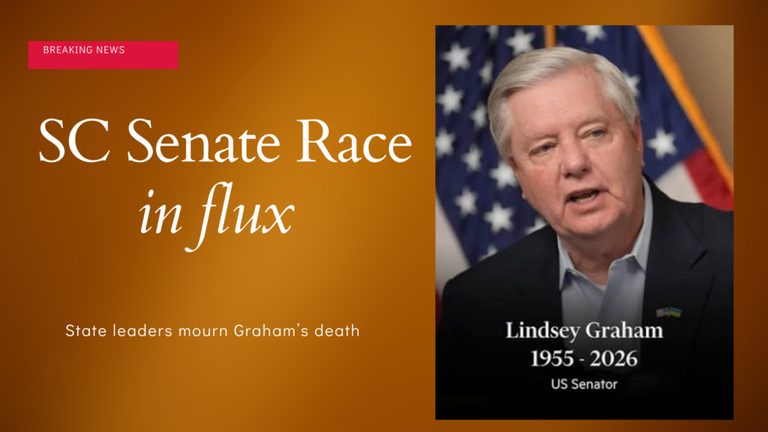
The upcoming discussions on Graham’s successor and Israel will shape the future of U.S. foreign policy in the region, including critical decisions on military aid and diplomatic relations. S.C. Sen. Lindsey Graham, R-S.C., died on July 11, 2026, at 71, hours after returning from a trip to Ukraine.
Under the 17th Amendment and South Carolina law, Gov. Henry McMaster, a Republican, will appoint an interim senator to serve until a successor is elected. The seat was already on the 2026 ballot before Graham’s death. Names floated in early reporting include U.S. Reps. Nancy Mace, Ralph Norman, Nikki Hailey, and William Timmons, Lt. Gov. Pamela Evette and, on the Democratic side, Annie Andrews.
Israel Aid
The next senator from this state will help decide whether the United States keeps sending Israel roughly $3.8 billion a year. This aid is the policy the Democratic Socialists of America wants to end. The DSA is an organization and political movement that officially endorses the Boycott, Divestment, Sanctions movement and calls for ending U.S. military aid to Israel.
South Carolina, by contrast, is structurally and durably pro-Israel. In 2015 it became the first state in the nation to pass an anti-BDS law, signed by then-Gov. Nikki Haley. McMaster signed a law adopting the international definition of antisemitism in 2024, stating that “South Carolina has long stood with Israel”.
Local Impact
A bipartisan South Carolina-Israel Caucus formed in 2025, and the state Senate passed a resolution recognizing the “enduring friendship” between the two. Graham himself was among the Senate’s most aggressive Israel hawks for three decades. Roughly 39% of South Carolina adults identify as evangelical Protestant — the state’s largest religious subgroup.
The DSA has three chapters in South Carolina, none on the Grand Strand, and no measurable statewide electoral weight. The idea that South Carolina is poised to shift its stance on Israel is unlikely, given the state’s strong support for the country.
Original reporting: MyrtleBeachSC News — read the source article.