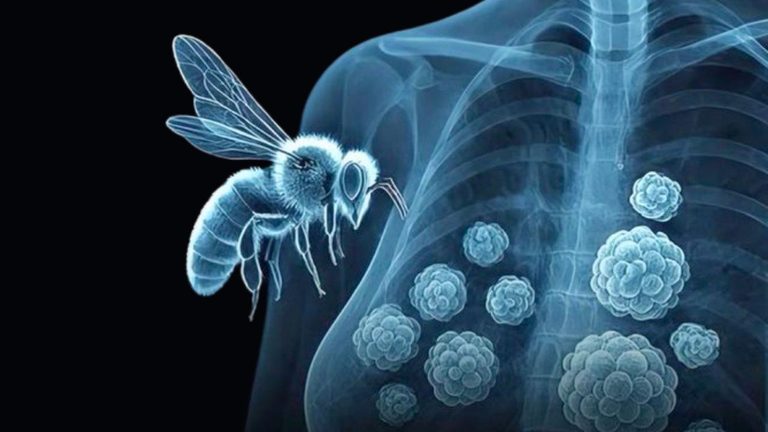
A 2020 laboratory study on honeybee venom and breast cancer continues to draw attention as researchers seek new options for aggressive, hard-to-treat forms of the disease. The study found honeybee venom destroyed two types of hard-to-treat breast cancer cells. Melittin, the main component of honeybee venom, reduced cancer cell growth and can be produced synthetically.
Breast Cancer and Honeybee Venom
Breast cancer remains the most common cancer among U.S. women, with an estimated 321,910 new invasive cases projected in 2026 and about 42,140 deaths. Triple-negative breast cancer, which lacks estrogen receptor, progesterone receptor, and HER2 targets, accounts for roughly 10-15% of cases overall and carries higher mortality due to limited targeted options and more aggressive behavior.
The study published in the peer-reviewed journal npj Precision Oncology tested venom from 312 honeybees and bumblebees. Honeybee venom and its main component, melittin, rapidly destroyed triple-negative and HER2-enriched breast cancer cells. A specific concentration induced 100% cancer cell death within 60 minutes with minimal effects on normal cells.
Potential for Future Treatment
While the findings remain preclinical and no human trials have begun, the work offers potential avenues for synthetic compounds that could one day complement existing therapies. Researchers have called for further studies on dosing, toxicity, delivery methods, and safety before any clinical use.
Bee venom has been used in traditional medicine for thousands of years. Ancient Egyptians, Greeks, Chinese, and Indians applied it — known as apitherapy — for arthritis, rheumatism, inflammation, and pain. Modern studies have examined its anti-inflammatory, antimicrobial, and potential neuroprotective properties.
Original reporting: The Dallas Express — read the source article.