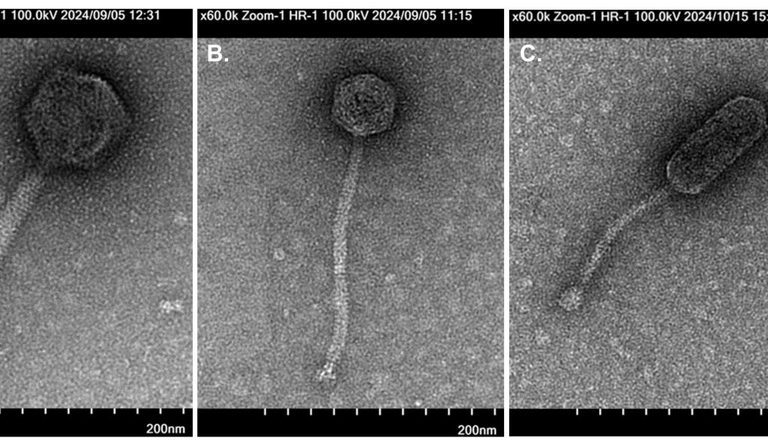
A team of researchers at Naval Medical Research Unit San Antonio, led by microbiologist Yoon Hwang, discovered 14 new viruses known as bacteriophages. These viruses have the potential to be used as an alternative or supplement to antibiotics in clinical settings.
Local Research with Global Implications
The researchers found the new phages in wastewater samples from treatment plants in Austin, Arlington, and Laredo. The phages were given Texas-themed names, including AllMyExes, Riverwalk, and Alamo. The team’s findings were published in the journal Microbiology Resource Announcements and PLOS ONE.
The discovery of these new phages is significant because they could be used to combat antimicrobial-resistant infections. According to Hwang, bacteria are becoming increasingly resistant to antibiotics, and phages could provide a new solution. The researchers are still uncovering new phages and sequencing their genomes, which could lead to new treatments for infections.
Potential Applications
The new phages could be used to treat a range of infections, including those caused by the bacterium Enterococcus faecalis. This bacterium is often found in root canals and can cause serious infections. The researchers found that the new phages were effective in killing E. faecalis, and they could be used in a dental cleaning solution for root canals.
The U.S. Navy is interested in the research because it could help minimize the time sailors spend away from battle due to dental issues. The Navy wants to find new ways to treat bacterial infections, and phages could provide a solution.
Original reporting: San Antonio Report — read the source article.