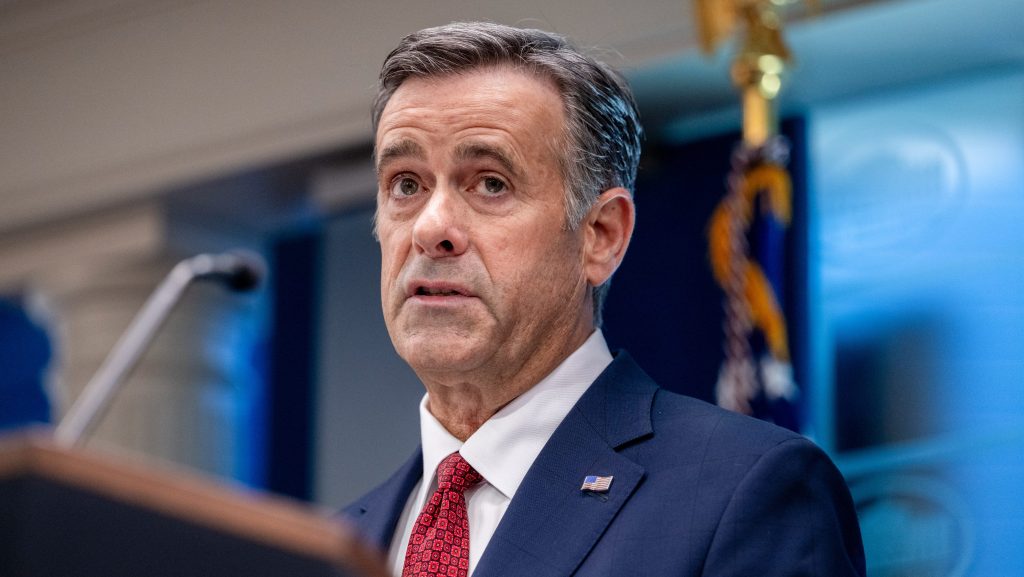
CIA Director John Ratcliffe traveled to Havana and met with Raulito Rodriguez Castro, members of Cuba’s interior ministry and the island’s intelligence chief to deliver a message from President Donald Trump and press for changes on security and economic cooperation, while Cuba pushed back and insisted it is not a U.S. security threat.
Ratcliffe’s visit was framed by U.S. officials as a direct, high-level effort to reopen conversations on difficult topics with Havana. A CIA official said Ratcliffe was there “to personally deliver President Trump’s message that the United States is prepared to seriously engage on economic and security issues, but only if Cuba makes fundamental changes.” The trip underlined how the White House wants results rather than rhetoric.
According to U.S. sources, the discussions covered practical areas where cooperation could pay off quickly for both countries. The CIA official said they talked about “intelligence cooperation, economic stability, and security issues, all against the backdrop that Cuba can no longer be a safe haven for adversaries in the Western Hemisphere.” Those were not idle talking points; they reflect hard national security priorities.
Cuban state statements pushed back sharply on the premise that the island threatens U.S. safety. Havana asserted that it supplied information which “made it possible to categorically demonstrate that Cuba does not constitute a threat to U.S. national security,” and added there were no “legitimate reasons to include it on the list of countries that allegedly sponsor terrorism.” Those rebukes are predictable, but they don’t erase the geopolitical realities at play.
The timing of Ratcliffe’s stop in Havana is tied to a broader policy tug-of-war in Washington. The Biden administration removed Cuba from the U.S. list of state sponsors of terrorism in January 2025, and President Donald Trump reinstated the designation on his first day in office of his second term. That flip-flop on a signature national security label has fed uncertainty in Havana and among international partners.
Another urgent factor is Cuba’s deepening energy crisis after the U.S. military’s January arrest of Venezuela’s president, a blow to an ally that had supplied Caracas’s oil to the island. The consequences are immediate: without reliable Venezuelan shipments, Cuba’s fuel reserves have cratered and basic services are strained. Cuban officials admit the shortfalls, and U.S. diplomats see leverage in offering humanitarian relief tied to transparency and accountability.
The State Department publicly offered “support for free and fast satellite internet and $100 million in direct humanitarian assistance.” At the same time, the department’s statement was blunt and critical, calling Havana a “corrupt regime.” Washington made clear any money would flow through nongovernmental channels and independent organizations, not through ministries that have long controlled aid distribution.
Cuba’s foreign minister Bruno Rodriguez used a on Thursday to say his government was waiting for more details and would not reject aid given in good faith. He emphasized “the incongruity of this apparent generosity from a party that subjects the Cuban people to collective punishment through economic warfare.” Rodriguez added, “We are willing to hear the details of the offer and how it would be implemented.” Those lines show Havana’s posture: wary, defensive, and sensitive to political strings.
Secretary of State Marco Rubio pushed back directly on the claim that the U.S. is the obstacle, telling NBC Nightly News anchor Tom Llamas that Cuba’s government “is the holdup.” “It’s Cuba. They are the holdup,” Rubio said, and he stressed the money’s only condition was independent distribution. “This can’t be humanitarian aid that the government steals for itself,” Rubio said, spelling out the administration’s red line in plain terms.
The history here matters: an embargo and sanctions stretch back decades, there was a brief thaw under the Obama administration, and President Trump rolled many of those changes back in 2017. With Venezuela’s leadership removed and Cuba’s energy lifelines severed, Havana faces shortages that its minister of energy, Vicente de la O Levy, warned are severe enough that the island has effectively run out of oil. The resulting pressure is a backdrop to negotiations that are part policy, part leverage, and entirely consequential for ordinary Cubans.
https://x.com/brunorguezp/status/2054902319976726573?s=46&t=2VveINUmeipjo74dbnzJiQ