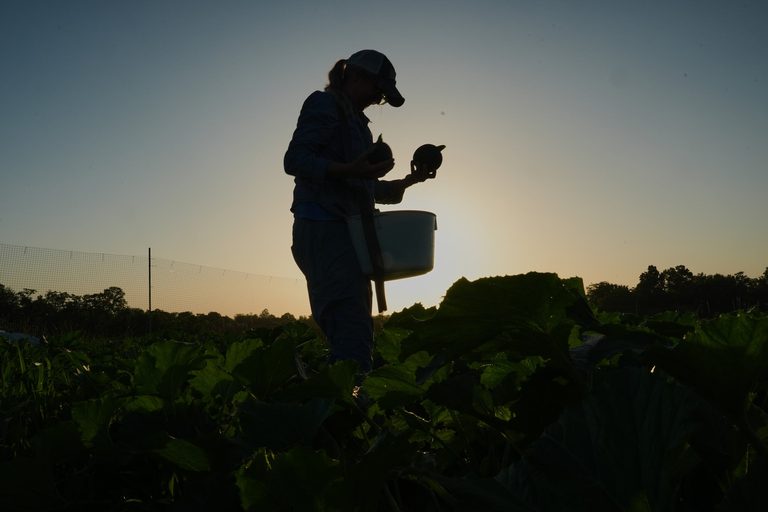
As the sun sets on her 50-acre farm in Brooksville, Kentucky, Annie Woods walks out to harvest squash and zucchini, navigating the challenges of prolonged and intense heat waves. These heat waves, part of a climate change-driven pattern of weather extremes, have led to shorter planting windows and potential loss of crops for farmers like Woods.
Adapting to the Heat
Woods has found ways to adapt, adjusting her harvest schedule to avoid the hottest parts of the day and taking frequent water breaks. She plants and harvests by hand, unlike larger farms that often rely on machinery, and uses a tent to create shade when needed.
Extreme heat coupled with periods of rain and high humidity can also bring diseases and pests that can destroy crops. Woods prioritizes harvesting vulnerable crops, such as tender salad greens, and keeps her seedlings in a cooler environment to protect them.
Supporting Local Farmers
Woods’ community-supported agriculture program gives her flexibility in case one crop fails, as her customers support the farm for the season regardless of the vegetables they receive. This approach, combined with crop diversity, helps her “hedge our bets” against heat, floods, and drought.
Other farmers, like Paul Rasch, who owns and operates multiple fruit orchards in central Iowa, are also feeling the impact of extreme heat. Rasch has shortened his harvest window for certain specialty crops and installed air conditioning and shade structures to protect his workers and customers.
Smaller farms like Woods’ and Rasch’s often plant and harvest a wide variety of crops throughout the year, which helps protect against losses. However, they may not have access to the same safety nets as farmers of traditional commodity crops, such as federal crop insurance programs.
Original reporting: WTVQ (Lexington) — read the source article.