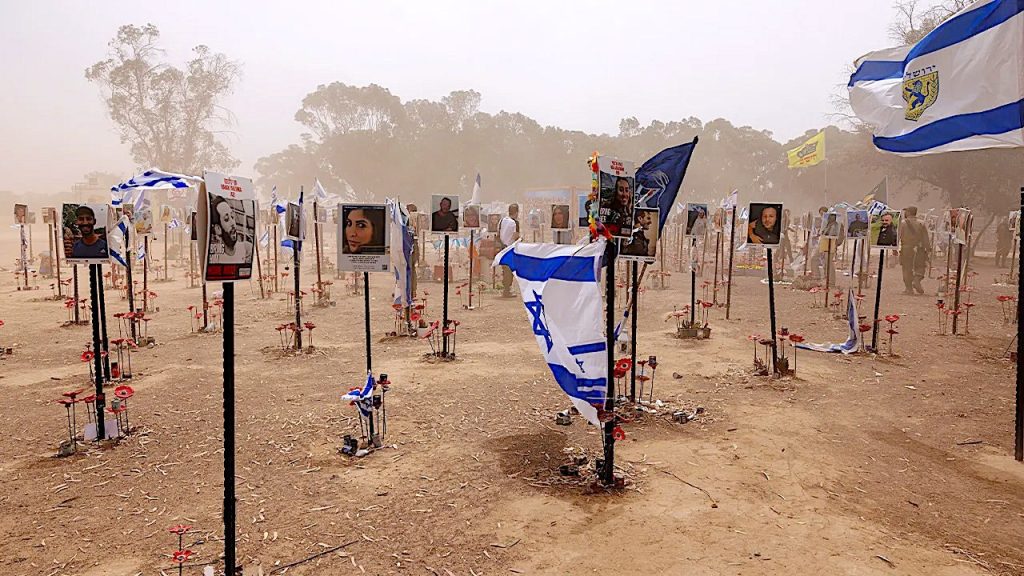
WARNING: This article includes graphic and disturbing accounts from the October 7 massacre in Israel. A report from the Civil Commission on Oct. 7 Crimes Against Women and Children, led by Dr. Cochav Elkayam-Levy, says Hamas and Palestinian collaborators used sexual and gender-based violence deliberately and systematically during the October 7 attacks in southern Israel. The investigation points to abuses at the Nova Music Festival, on kibbutzim near the Gaza border, at Israel Defense Forces bases and among hostages held in Gaza, and the testimony includes accounts from former captive Rom Braslavski.
The Israeli nonprofit assembled evidence from multiple sites and survivors to map how sexual violence was used as part of the broader assault. Investigators recorded patterns across scenes, in captivity and in the condition of recovered bodies that point to organized, repeated crimes rather than random acts of brutality. The report stresses the scale and methodical nature of what it describes as gender-based crimes tied to the October 7 operation.
According to the commission, investigators identified at least 13 recurring forms of abuse that include rape, sexual torture, targeted shootings to intimate areas and acts carried out after death. The catalogue of offenses was compiled with forensic input and witness testimony to build a detailed pattern of harm. That pattern, the report argues, amounts to a deliberate tactic intended to terrorize and degrade victims and communities.
Dr. Cochav Elkayam-Levy, founder and chair of the Civil Commission and a principal co-author of the report, described the psychological toll on the team as they worked through evidence and testimony. “We had to not only collect materials, but also review and analyze it alongside forensic experts while witnessing human suffering at its worst,” Elkayam-Levy said. “What motivated us was the denial, the hesitation and the questioning. We wanted to ensure that the world knows what happened to the victims.” “For us, it is a final act of justice for the victims,” she added.
The report recounts cases where sexual violence was committed in view of family members or forced on relatives, amplifying the trauma by making abuse a communal weapon. One witness described relatives being coerced into committing acts on each other, a tactic the commission highlights as part of a broader effort to crush dignity and spread fear. These testimonies fed into the commission’s finding that sexualized violence was integrated into operational conduct on October 7.
Investigators also say perpetrators used videos and social media to magnify the harm, broadcasting sexualized material as part of psychological warfare. The commission documented how digital platforms were used to publicize attacks and to humiliate victims beyond the physical violence. That online circulation is described as an extension of the attacks, intended to terrorize audiences well beyond the immediate crime scenes.
Elkayam-Levy pressed for the report’s findings to reach beyond academic or activist circles and into security and policy arenas, arguing that understanding these crimes is essential to preventing them. “We cannot prevent what we do not fully understand,” Elkayam-Levy said. “No single prosecution could ever capture the full magnitude of these crimes in the way this report does. It is therefore critical that policymakers, decision-makers, members of Congress and senators find ways to formally recognize these findings and hold hearings so we can begin addressing this issue. We want the findings of this report to receive formal institutional recognition.”
The commission noted the global impact of the October 7 atrocities, recording victims from 52 countries and emphasizing that the scope of harm crossed borders. Witness testimony ranges from accounts of sexual assault prior to beheading to reports of repeated rape followed by stabbing, and describes deaths amid sustained sexual violence. Those accounts, while harrowing, were gathered to establish consistent patterns rather than isolated anecdotes.
Investigators reported especially brutal mutilations in several cases: female victims found naked or partially unclothed with severe mutilation, objects such as grenades, nails and tools inserted into bodies, and gunshot wounds concentrated on intimate areas. The report lists broken pelvises, torn bodies and bloodied underwear among morgue findings, and notes that male and female former hostages testified to rape, sexual torture and abuse during abduction and captivity. Some survivors described assaults while receiving medical treatment in Gaza facilities, according to the commission’s material.
Former hostage Rom Braslavski is among those who publicized what he says he endured in captivity, offering a first-person account of prolonged torture and abuse. “They would hit me with whatever they had on hand. I underwent severe torture, bondage and sexual abuse. Everything they could do to me, they did. My body is still covered in scars. After four months of torture, I was clinically dead, rolling my eyes and passing out. They decided to stop the violence and brought doctors to treat me with injections and gave me food again,” he said. His testimony is included in the commission’s archive as part of the broader evidentiary record.
The report calls the sexual and gender-based violence “widespread and systematic” and an “integral component” of both the October 7 attacks and the subsequent treatment of captives, and stresses the urgency of international accountability. Recommendations include targeted sanctions against individuals and entities implicated in the assault and its aftermath, and actions to counter denial, minimization or politicization of the sexual crimes documented by the commission. The document urges legal mechanisms be used to pursue accountability at scale.
Among the commission’s legal recommendations is the creation of a comprehensive gender strategy within Israel’s prosecutorial framework and the establishment of a specialized chamber or panel of judges to prosecute these sexual and gender-based crimes. Elkayam-Levy said the report has gained international attention and shifted the public conversation from doubt about whether crimes occurred to examining their consequences. “We feel the discussion has shifted from questioning whether these crimes occurred to examining their consequences,” she said. “There is now a substantial legal evidentiary foundation preserved in a secure archive that cannot be denied.”